
CMMS ROI Business Case bakeng sa Afrika Borwa: Haha Dinomoro
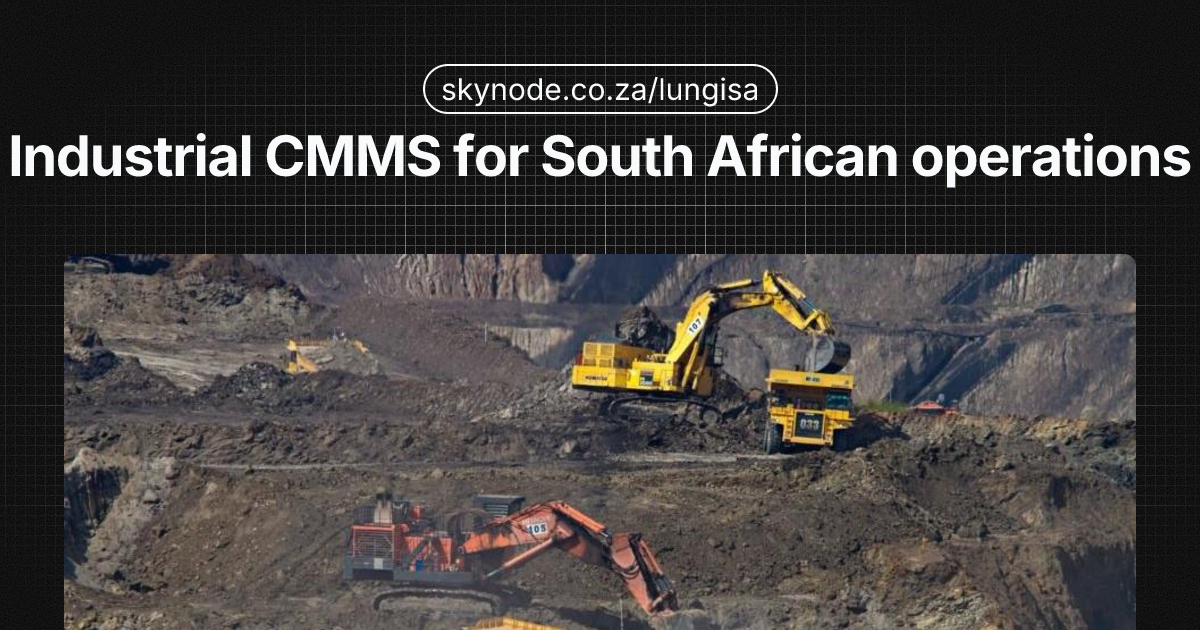
Tlhokomelo is often treated as a tšenyehelo/ditshenyegelo centre. Ha you ask for budget for a CMMS, finance wants numbers: eng does it tšenyehelo/ditshenyegelo, eng do we save, and ha do we get our money back? A strong CMMS ROI story turns seo conversation from “hobaneng should we spend?” into “how soon can we start?” Sena tataiso shows ho etsa jwang build a CMMS business case in Afrika Borwa using current tšenyehelo/ditshenyegelo, projected savings, implementation tšenyehelo/ditshenyegelo, and payback in rand: eng to include, ho etsa jwang quantify today’s tlhokomelo pain, and ho etsa jwang present it so tlhokomelo/taolo and the CFO can say yes.
Hobaneng You Need a Business Case for CMMS
Ntle le a formal business case, CMMS investment is easy to defer. Tlhokomelo competes le tsoalo, capex, and tšenyehelo/ditshenyegelo-cutting initiatives. Finance and leadership are used to seeing tlhokomelo as an expense seo must be minimised. A CMMS business case reframes the question: not “how much does tlhokomelo tšenyehelo/ditshenyegelo?” but “how much does poor tlhokomelo tšenyehelo/ditshenyegelo, and eng do we gain by fixing it?” Ha you put a number on the tšenyehelo/ditshenyegelo of reactive tlhokomelo, nako e sa sebetseng, and tš compliance risk, the CMMS becomes an investment le a measurable return. Seo shift is eng gets budget approved.
The CFO Needs Numbers, Not Features
CFOs and boards evaluate projects on risk and return. They care less about taelo/taelo ya mosebetsi workflows or mobile apps than about: Will sena reduce tšenyehelo/ditshenyegelo or risk? Eng is the payback period? Eng happens if we do nothing? A business case seo leads le CMMS ROI, quantified savings, payback in months, and the tšenyehelo/ditshenyegelo of inaction, speaks their language. Lead le the financials; use features only to support how those financials are achieved.
Eng to Include in Your CMMS Business Case
A complete CMMS business case has four building blocks: current tšenyehelo/ditshenyegelo (eng you spend today on tlhokomelo and its maemo a arohaneng), projected savings (eng a CMMS can realistically deliver), implementation tšenyehelo/ditshenyegelo (software, setup, and training), and payback (how long until benefits exceed tšenyehelo/ditshenyegelo). Missing any one of these weakens the case. Sena section outlines each; the following sections show ho etsa jwang calculate them.
Current Tšenyehelo/Ditshenyegelo
These are the tšenyehelo/ditshenyegelo you incur today because tlhokomelo is reactive, poorly planned, or poorly recorded. They include nako e sa sebetseng, the reactive tlhokomelo premium (emergency ho lokisa tšenyehelo/ditshenyegelo more than planned ones), overtime, tš compliance penalties or risk, and moebedi/baebedi spend seo could be reduced le better planning. Quantifying current tšenyehelo/ditshenyegelo is the foundation: it defines the size of the opportunity and the denominator for CMMS ROI.
Projected Savings
Savings come from fewer e sa lebelletseng maemo a arohaneng, lower spare-parts tšenyehelo/ditshenyegelo through better planning and inventory, higher preventive tlhokomelo (PM) tš compliance, and less overtime. Industry benchmarks and pilot data support these estimates. Be conservative: use ranges (e.g. 20–30% reduction in nako e sa sebetseng) and document your assumptions so finance can stress-test them.
Implementation Tšenyehelo/Ditshenyegelo
Include CMMS subscription fees (kgweding le kgweding or annual), one-off implementation or setup (data migration, configuration, integration if any), and training. Do not hide these; a credible business case shows total tšenyehelo/ditshenyegelo of ownership so payback is calculated on real spend.
Payback Period
Payback is the time in months or years until cumulative savings equal cumulative tšenyehelo/ditshenyegelo. A payback of 12–18 months is often acceptable for operational improvements in Afrika Borwa meepo, thepa, and thepa. Shorter payback strengthens the case; longer payback may still be justified if risk reduction (e.g. tš compliance, polokeho) is material.
Calculating Your Current Tlhokomelo Tšenyehelo/Ditshenyegelo
To build the “pele” side of your CMMS ROI, you need a realistic picture of eng poor or reactive tlhokomelo tšenyehelo/ditshenyegelo today. The main categories are below. You do not need perfect data; reasonable estimates are enough to build a credible business case. For a detailed method to put a number on nako e sa sebetseng alone, bona our tataiso on [ho etsa jwang calculate the tšenyehelo/ditshenyegelo of nako e sa sebetseng in Afrika Borwa](/lungisa/blog/nako e sa sebetseng-tšenyehelo/ditshenyegelo-calculator-south-africa).
Nako e sa sebetseng
E sa lebelletseng stoppages tšenyehelo/ditshenyegelo lost tsoalo, idle labour, and often expedited parts and overtime. Use your actual or estimated tšenyehelo/ditshenyegelo per hour of nako e sa sebetseng for e bohlokwa thepa or lines. If you do not have it yet, use the formula: lost tsoalo (throughput × nako e sa sebetseng × contribution margin) plus labour and parts. Even one or two e bohlokwa thepa will give you a number seo makes the case. Nako e sa sebetseng is usually the largest single lever in the CMMS ROI equation.
Reactive Tlhokomelo Premium
Emergency ho lokisa typically tšenyehelo/ditshenyegelo 2–4 times more than the same work done in a planned window: premium rates for moebedi/baebedi, expedited parts, overtime, and less efficient use of labour. Estimate eng share of your tlhokomelo spend is reactive (e.g. 60%) and apply a premium factor (e.g. 2×) to the reactive portion to approximate the avoidable premium.
Overtime
Reactive tlhokomelo pushes work into nights and weekends. Track overtime hours attributed to maemo a arohaneng or catch-up work and apply your loaded labour rate. Reducing reactive work directly reduces sena tšenyehelo/ditshenyegelo.
Tš compliance Penalties and Risk
Tlasa the OHS Act and, in meepo, the MHSA, maemo a arohaneng to maintain thepa can lead to improvement notices, fines, or prohibition. In meepo, poor tlhokomelo also raises the risk of Section 54 or 55 stoppages kamorao DMR teko/diteko. Include any actual penalties or remediation tšenyehelo/ditshenyegelo from the past 12–24 months. For risk you have not yet paid, use a probability-weighted estimate (e.g. one significant incident per X years × tšenyehelo/ditshenyegelo) so the business case reflects the tšenyehelo/ditshenyegelo of non-tš compliance.
Moebedi/Baebedi Spend
Ha internal capacity is overwhelmed or skills are missing, moebedi/baebedi are used at premium rates. A CMMS seo improves planning and PM tš compliance can reduce the volume of emergency call-outs and allow more work to be done in-house or on thulaganyo/reriloe contracts. Compare current moebedi/baebedi spend to a realistic “kamorao” scenario.
Projected CMMS Savings: Eng to Expect
Savings depend on your starting point and how well you implement. The following ranges are commonly used in CMMS ROI models and are consistent le benchmarks in Afrika Borwa and international ditshebetso. Use the middle or conservative end of ranges unless you have pilot data seo supports higher figures.
Reduction in E sa lebelletseng Nako e sa sebetseng (25–30%)
Better preventive tlhokomelo and faster response ha maemo a arohaneng occur typically yield a 25–30% reduction in e sa lebelletseng nako e sa sebetseng hours. Apply sena to your current tšenyehelo/ditshenyegelo-per-hour of nako e sa sebetseng to get the annual saving. Sena is often the largest line item in the CMMS ROI calculation.
Reduction in Spare Parts Tšenyehelo/Ditshenyegelo (around 20%)
Improved planning reduces emergency purchases and duplicate orders; better inventory visibility reduces overstock and obsolescence. A 20% reduction in ditho tsa spare spend is a reasonable target for ditshebetso seo currently have weak planning and no formal CMMS.
PM Tš compliance Improvement
Higher PM tš compliance means more work is done pele maemo a arohaneng. Define your current tš compliance rate (e.g. % of PMs completed on time) and set a target (e.g. 85–95%). The benefit is reflected in lower nako e sa sebetseng and lower reactive premium; you can also show it as a separate metric for tlhokomelo/taolo (e.g. “PM tš compliance from 60% to 90%”).
Reduced Overtime
As reactive work falls, overtime attributed to maemo a arohaneng and catch-up should decrease. Estimate the percentage of overtime seo is tlhokomelo-related and apply the same 25–30% reduction logic to get an overtime saving.
CMMS Tšenyehelo/Ditshenyegelo and Payback: Eng You Will Pay
To complete the CMMS ROI and payback calculation, you need total tšenyehelo/ditshenyegelo of ownership. Three components matter.
Subscription
SaaS CMMS is typically paid kgweding le kgweding or selemo le selemo per user or per thepa. In Afrika Borwa, Lungisa is priced from R1,499 to R3,999 per month depending on tier and users. Use your shortlisted vendor’s pricing and multiply by 12 for annual software tšenyehelo/ditshenyegelo.
Implementation
One-off tšenyehelo/ditshenyegelo include data migration (thepa register, PM schedules, ditho tsa spare), configuration (workflows, notifications, phuputso/liphuputso), and any integration le ERP or other tsamaiso/ditsamaiso. Allow for internal time (tlhokomelo, IT) and any external implementation support. Even a light implementation has a tšenyehelo/ditshenyegelo; include it so payback is realistic.
Training
Training ensures adoption. Include the tšenyehelo/ditshenyegelo of training sessions, materials, and the time of staff attending. Skimping on training often shows up later as low adoption and weaker CMMS ROI.
Worked Example in Rand
Assume a mid-sized thepa site le the following simplified figures.
Current tšenyehelo/ditshenyegelo (annual):
- Nako e sa sebetseng (e sa lebelletseng): R2,400,000
- Reactive tlhokomelo premium: R800,000
- Overtime (tlhokomelo-related): R400,000
- Total current tšenyehelo/ditshenyegelo: R3,600,000
Projected savings (conservative):
- Nako e sa sebetseng reduction 25%: R600,000
- Ditho tsa spare reduction 20% on R500,000 spend: R100,000
- Overtime reduction 25%: R100,000
- Total annual saving: R800,000
CMMS tšenyehelo/ditshenyegelo (Year 1):
- Subscription (Lungisa mid-tier, R2,999/month × 12): R35,988
- Implementation (data, config, 40 hours internal + small external): R80,000
- Training: R25,000
- Total Year 1 tšenyehelo/ditshenyegelo: R140,988
Ongoing (Year 2+): subscription only, R35,988 per year.
Payback: Year 1 net = R800,000 − R140,988 = R659,012. Payback is well tlasa 12 months. In Year 2 and beyond, net benefit is roughly R764,012 per year (R800,000 − R35,988). The CMMS ROI is positive from the first year.
Your numbers will differ. The point is to use the same structure: current tšenyehelo/ditshenyegelo baseline, conservative savings, full implementation and subscription tšenyehelo/ditshenyegelo, then payback and ongoing benefit. Adjust the percentages and amounts to match your site and document assumptions so the CFO can validate them.
Intangible Benefits: Hobaneng They Matter (But Do Not Replace ROI)
A CMMS delivers benefits seo are hard to put in rand but still matter for the business case.
Tš compliance and Audit Readiness
Ha molaudi/ba-audit ask for tlhokomelo tsediso/ditshediso, having taelo/taelo ya mosebetsi, PM completions, and thepa history in one tsamaiso/ditsamaiso reduces audit risk and preparation time. For OHS Act and MHSA environments, sena is a real risk reduction even if you do not put a rand value on every avoided notice.
Knowledge Retention
Procedures and history in the CMMS reduce dependence on a few individuals. Ha experienced mosebetsi o tsebileng/basebetsi ba tsebileng leave, the next person can bona eng was done and how. Seo reduces the tšenyehelo/ditshenyegelo and risk of turnover.
Data-Driven Decisions
Le accurate thepa and work history, you can prioritise by criticality, bona e leng thepa fail most, and adjust PM frequency or scope. Seo leads to better capital and tlhokomelo decisions over time.
In the business case, mention these kamorao the financial CMMS ROI. They support the story and help le risk-focused stakeholders; they do not replace the need for a clear payback number.
Presenting the CMMS Business Case to Tlhokomelo/Taolo
Structure the presentation around risk and return, not software features.
-
Open le the problem. Summarise current tšenyehelo/ditshenyegelo of nako e sa sebetseng, reactive premium, and tš compliance risk. Use one or two numbers seo resonate (e.g. “We lose an estimated R2.4 million per year to e sa lebelletseng nako e sa sebetseng”).
-
State the opportunity. “A CMMS can reduce these tšenyehelo/ditshenyegelo by X% based on industry benchmarks and our own estimates. Annual saving is approximately RY.”
-
Show the investment. Total Year 1 tšenyehelo/ditshenyegelo (subscription, implementation, training) and ongoing annual tšenyehelo/ditshenyegelo. Use local pricing (e.g. Lungisa R1,499–R3,999/month) so it is credible.
-
Give the payback. “Payback in X months. Kamorao seo, we retain the projected annual saving in ongoing benefits plus reduced tš compliance and operational risk.”
-
Address “eng if we do nothing?” Reiterate seo current tšenyehelo/ditshenyegelo and risk continue; the only way to capture the savings and reduce risk is to invest.
-
Keep features in the appendix. Taelo/Taelo ya mosebetsi, mobile access, and reporting are the how; the board and CFO care about the hobaneng (CMMS ROI and risk) and the ha (payback).
If you need a step-by-step approach to rolling out the tsamaiso/ditsamaiso kamorao approval, bona our tataiso on ho etsa jwang implement a CMMS in Afrika Borwa. For a clear explanation of eng a CMMS is and how it supports tlhokomelo and tš compliance, bona eng is CMMS in Afrika Borwa.
Building a business case for CMMS in Afrika Borwa is about turning tlhokomelo from a tšenyehelo/ditshenyegelo into an investment le a number. Quantify current tšenyehelo/ditshenyegelo, apply conservative savings, add full implementation and subscription tšenyehelo/ditshenyegelo, and show payback in rand. Lead le CMMS ROI and risk reduction ha you present to tlhokomelo/taolo; use the same structure whether you run a mine, a factory, or a multi-site facility. Bona how Lungisa helps Afrika Borwa ditshebetso move from reactive tlhokomelo to planned, auditable taelo/taelo ya mosebetsi le clear ROI and tš compliance support.
E ngotsweng ke
Lungisa Team