
Melemo ya Mobile CMMS bakeng sa Ditshebetso tsa Afrika Borwa
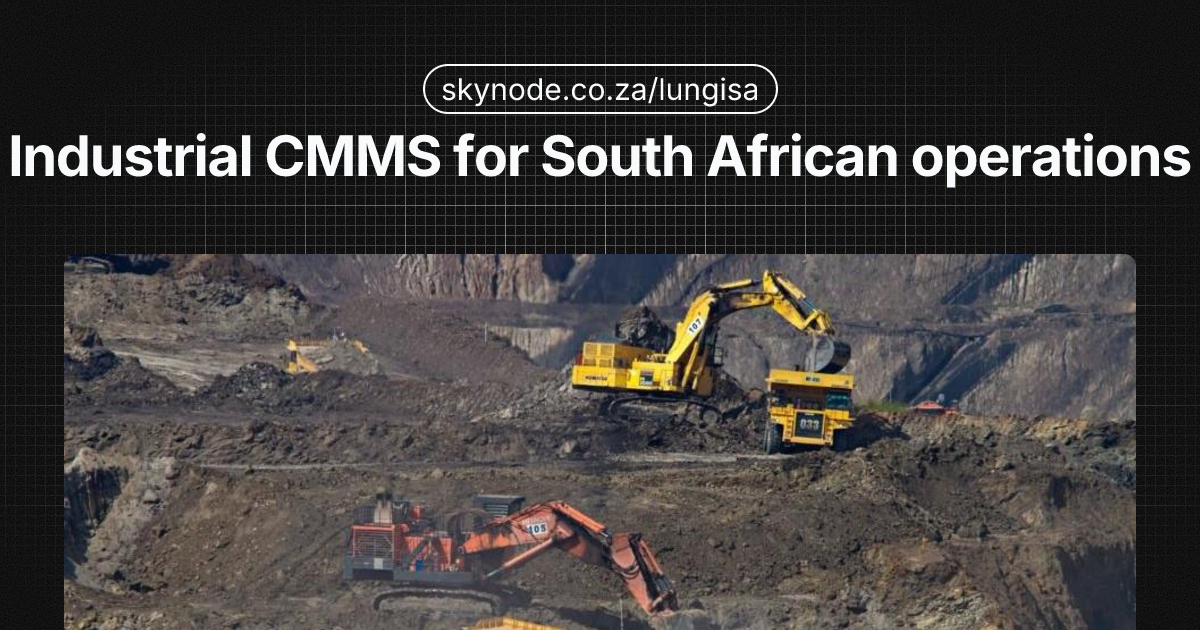
Tlhokomelo happens on the floor, in the feberi/thepa, and at the thepa, not at a desk. Ha taelo/taelo ya mosebetsi, checklists, and completion tsediso/ditshediso live only on a desktop or in a back office, mosebetsi o tsebileng/basebetsi ba tsebileng waste time walking back to a terminal, scribbling on paper and typing later, or missing steps because they cannot bona the procedure at the point of work. The result is delayed close-out, weak audit trails, and data seo arrives too late for planners or molaudi/ba-audit.
A mobile CMMS puts the tsamaiso/ditsamaiso in the mosebetsi o tsebileng/basebetsi ba tsebileng’s hand: taelo/taelo ya mosebetsi on a smartphone or tablet, completion captured moo the work is done, and better data le less admin. For Afrika Borwa ditshebetso, moo connectivity is often unreliable and sites range from urban thepa to remote gold and platinum mines, mobile CMMS is not a nice-to-have; it is how tlhokomelo execution actually improves. Sena tatelano explains hobaneng mobile matters, eng to look for in a mobile CMMS, and how it pays off in the Afrika Borwa context.
Hobaneng Mobile CMMS Matters for Tlhokomelo
Mosebetsi o tsebileng/Basebetsi ba tsebileng spend most of their day at the thepa. They need to know eng work is assigned, eng the procedure is, eng parts are needed, and ho etsa jwang tsediso/ditshediso eng they did. If seo information is only available on a computer in an office or control room, they either make extra trips, work from memory, or write on paper and someone else keys it in later. Each of those options tšenyehelo/ditshenyegelo time, introduces errors, and weakens the audit trail.
A mobile CMMS gives the mosebetsi o tsebileng/basebetsi ba tsebileng a single place to bona assigned work, open procedures and checklists, log time and parts, attach photos, and close the job, all from the device they carry. Supervisors and planners bona real-time status; no more “did seo get done?” or lost paperwork. The result is faster feedback loops, fewer errors, and a single source of truth for eng was done and ha. For an overview of how a CMMS supports tlhokomelo execution and tš compliance, bona our tataiso on eng is CMMS in Afrika Borwa.
Key Mobile CMMS Features
Not every “mobile-friendly” CMMS is equal. The following features separate a proper mobile CMMS from a desktop tsamaiso/ditsamaiso seo merely works on a small screen.
Work Orders on the Phone
Mosebetsi o tsebileng/Basebetsi ba tsebileng should be able to view their assigned work, filter by priority or due date, open a taelo/taelo ya mosebetsi, and bona full details: thepa, location, description, procedure, checklist, e hlokahalang parts, and polokeho notes. They should be able to start the job, log labour time, and complete it, including pass/fail on checklist items and notes, ntle le switching to a desktop.
QR Code and Barcode Scanning
Ha thepa or locations are tagged le QR codes or barcodes, the mosebetsi o tsebileng/basebetsi ba tsebileng scans to open the correct thepa tsediso/ditshediso or to create or link a taelo/taelo ya mosebetsi. Scanning reduces wrong-thepa errors and speeds up data entry, especially in plants le many similar units. It also makes it easy to confirm “right thepa, right procedure” at the point of work.
Photo Capture
Photos support pele-and-kamorao bopaki, defect reporting, and tš compliance. A mobile CMMS should let the mosebetsi o tsebileng/basebetsi ba tsebileng attach photos to the taelo/taelo ya mosebetsi or to specific checklist items. Those images are stored le the taelo/taelo ya mosebetsi and become part of the history seo molaudi/ba-audit or insurers may request. No more lost photos on personal phones or separate folders.
Digital Sign-Off and Checklists
Completion should be captured digitally: checklist items marked pass/fail, notes moo needed, and sign-off (e.g. mosebetsi o tsebileng/basebetsi ba tsebileng name and date). Seo gives you a clear, auditable tsediso/ditshediso and removes the step of transcribing paper checklists. For OHS Act and MHSA tš compliance, digital sign-off le a timestamp is stronger than paper alone.
Offline Mode
Ha the device has no network connection, the mosebetsi o tsebileng/basebetsi ba tsebileng should still be able to view assigned work, complete checklists, log time, and add notes and photos. Data is stored locally and synced ha connectivity returns. Ntle le offline, mobile CMMS is useless in areas le poor coverage, underground mines, or during load-shedding ha towers or site networks drop. For Afrika Borwa ditshebetso, offline is essential; we return to sena below.
Afrika Borwa Benefits: Offline, Mines, Rural Sites, Load-Shedding
Afrika Borwa’s infrastructure and geography make mobile CMMS le offline capability particularly valuable.
Load-shedding, Ha the grid goes down, site power and often site networks go le it. Mosebetsi o tsebileng/Basebetsi ba tsebileng may still need to do rounds, complete e bohlokwa checks, or respond to maemo a arohaneng. A mobile CMMS seo works offline lets them capture work and sync ha power and connectivity return. For more on planning tlhokomelo around power cuts, bona tlhokomelo during load-shedding.
Underground and remote meepo, In mines, connectivity is limited or absent in many areas. Mosebetsi o tsebileng/Basebetsi ba tsebileng need to complete taelo/taelo ya mosebetsi and teko/diteko moo they are. Offline mobile CMMS allows capture at the face or in the workshop; data syncs ha they surface or reach a connected zone. For the broader picture of CMMS in meepo, bona CMMS for meepo in Afrika Borwa.
Rural and low-bandwidth thepa, Factories, farms, and thepa in outlying areas (e.g. KZN Midlands, Eastern Cape) often have slow or unstable internet. A tsamaiso/ditsamaiso seo assumes constant connectivity will frustrate users and lead to work being recorded on paper and entered later, defeating the purpose of mobile. Offline-first design ensures work is captured regardless of network quality.
Multi-site and field teams, Teams seo move between sites or spend the day in the field cannot depend on being near a desktop. Mobile CMMS gives them one place to bona and complete work wherever they are, le or ntle le connectivity.
Data capture in harsh environments, Dust, moisture, and vibration are common in plants and mines. A smartphone or ruggedised tablet le a CMMS app can be carried in a pocket or holster and used moo a laptop or paper would be impractical. Choose devices seo match the environment and ensure the app works on the operating tsamaiso/ditsamaiso and form factor you standardise on.
Productivity Gains: Wrench Time, Close-Out, and Data Quality
Mobile CMMS improves productivity in three ways.
More wrench time, Less time walking to a computer, finding paperwork, or waiting for a terminal means more time on the job. Mosebetsi o tsebileng/Basebetsi ba tsebileng bona their queue, open the procedure at the thepa, and complete the work ntle le leaving the area. Studies of tlhokomelo productivity often cite “wrench time” as the fraction of the shift spent on actual work; mobile CMMS increases it by reducing admin and travel.
Faster close-out, Ha completion is captured on the spot, taelo/taelo ya mosebetsi are closed the same day. There is no pile of paper job cards to type in, no delay pele the planner or supervisor sees seo the job is done. Backlog visibility and scheduling accuracy improve because the tsamaiso/ditsamaiso reflects reality quickly.
Better data quality, Data entered at the point of work, le dropdowns and checklists, is more accurate than data transcribed later from paper. Photos and notes are attached to the right taelo/taelo ya mosebetsi. Seo improves reporting, tš compliance bopaki, and any analysis you do on maemo a arohaneng rates, labour, or tšenyehelo/ditshenyegelo. Over time, seo data also supports ditho tsa spare planning and more accurate budgets, because the tsamaiso/ditsamaiso reflects eng was actually done and eng was used.
Eng to Look For in a Mobile CMMS
Ha evaluating a mobile CMMS for your Afrika Borwa operation, check the following.
Offline capability, Can mosebetsi o tsebileng/basebetsi ba tsebileng view and complete work ntle le connectivity? How does sync work ha they are back online? Are there limits on how much data can be taken offline? For mines and load-shedding-prone sites, sena is non-negotiable.
Usability on small screens, The mobile interface should be designed for touch and for quick use in the field: large buttons, simple navigation, minimal typing moo choices can be selected. A desktop interface shrunk onto a phone is not enough.
QR or barcode scanning, If you plan to tag thepa or locations, confirm seo the app can scan and link to the correct tsediso/ditshediso. Some products support sena natively; others require add-ons or workarounds.
Photo and attachment handling, Photos should attach to taelo/taelo ya mosebetsi or checklist items and sync ntle le requiring constant connectivity. Check whether there are limits on size or number and how they behave offline.
Security and access, Mosebetsi o tsebileng/Basebetsi ba tsebileng should log in (or have the device authenticated) so seo sign-off and actions are tied to a user. If the app supports offline, understand how credentials and data are stored on the device.
Alignment le your tš compliance needs, For OHS Act and MHSA, you need completion tsediso/ditshediso, timestamps, and the ability to phuputso/liphuputso by thepa, task, and period. Ensure the mobile CMMS feeds the same reporting and audit trail as the desktop tsamaiso/ditsamaiso.
Rolling Out Mobile CMMS: Practical Tips
Introducing a mobile CMMS works best ha mosebetsi o tsebileng/basebetsi ba tsebileng bona it as a tool seo makes their day easier, not as extra admin. Start le a pilot: one area, one shift, or one thepa type. Ensure seo taelo/taelo ya mosebetsi are properly assigned and seo procedures and checklists are attached so seo the first experience is complete and useful. Train on the device they will use, phone or tablet, and emphasise offline: they can complete work even ha the network is down.
If you use QR codes, tag a subset of thepa first and expand once the process is familiar. Collect feedback on eng is slow or confusing and refine pele rolling out to the full team. Ha mosebetsi o tsebileng/basebetsi ba tsebileng bona seo they no longer need to walk back to the office to close a job or seo their checklist is right there on the screen, adoption typically follows.
Support from supervisors, who can bona real-time completion and backlog, also helps, because they can allocate work and follow up ntle le chasing paper. Once the habit is established, the tlhokomelo KPI(s) and tš compliance phuputso/liphuputso seo depend on good completion data will improve as a direct result of mobile capture.
Summary
Tlhokomelo is done in the field; the tsamaiso/ditsamaiso should be there too. A mobile CMMS gives mosebetsi o tsebileng/basebetsi ba tsebileng taelo/taelo ya mosebetsi, procedures, checklists, and completion capture on a smartphone or tablet, le offline mode so seo load-shedding, mines, and low-bandwidth sites do not block execution. The result is more wrench time, faster close-out, and better data for reporting and tš compliance. Ha you evaluate CMMS options, treat mobile and offline not as extras but as core dinyehelo.
Bona how Lungisa helps Afrika Borwa ditshebetso run tlhokomelo from the field le offline mobile taelo/taelo ya mosebetsi, digital sign-off, and audit-ready tsediso/ditshediso for OHS Act and MHSA.
E ngotsweng ke
Lungisa Team