
Tataiso ya MTBF le MTTR bakeng sa Ditshebetso tsa Afrika Borwa
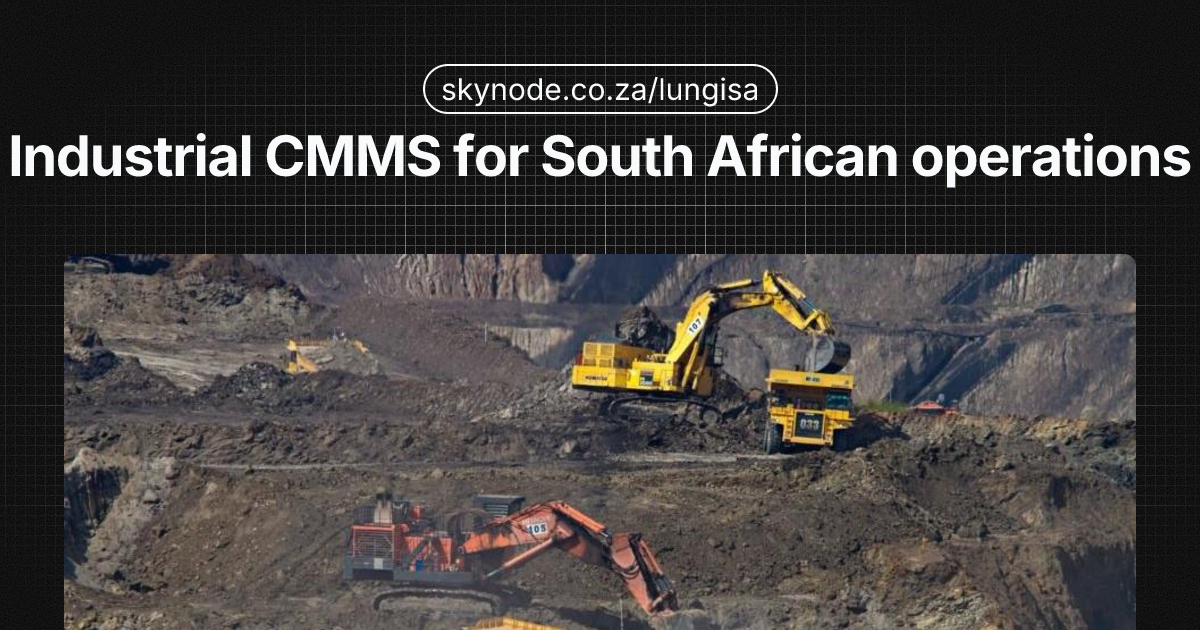
If you run a mine, a factory, or a facility in Afrika Borwa, you already know seo e sa lebelletseng nako e sa sebetseng tšenyehelo/ditshenyegelo more than labour and parts, it tšenyehelo/ditshenyegelo tsoalo, polokeho, and tš compliance. The question is ho etsa jwang measure whether your tlhokomelo is actually improving. MTBF and MTTR are two of the most widely used tlhokomelo KPI(s) for exactly seo: they tell you how often thepa fails and how long it takes to fix. Used together le OEE and a few other metrics, they give you a clear picture of thepa reliability and moo to focus next.
Sena tataiso explains ho etsa jwang calculate MTBF and MTTR, eng good looks like, and how tlhokomelo impacts broader metrics like OEE. We use concrete Afrika Borwa examples, a meepo hoist, a packaging line, and commercial HVAC, and show how a CMMS can track these KPI(s) automatically so you spend less time on spreadsheets and more time on improvement.
Hobaneng Tlhokomelo KPI(s) Matter
Ntle le numbers, tlhokomelo stays subjective. One shift says the feberi/thepa ran well; another says everything broke. Auditors and tlhokomelo/taolo want bopaki: are maemo a arohaneng going down? Is ho lokisa time improving? Are we doing enough preventive work? Tlhokomelo KPI(s) turn seo bopaki into a shared language. They help you:
- Prioritise, Focus on thepa or maemo a arohaneng types seo hurt the most.
- Benchmark, Compare your operation to industry norms and to your own past performance.
- Justify investment, Show the tšenyehelo/ditshenyegelo of reactive work and the payoff of preventive programs.
- Prove tš compliance, Demonstrate to MHSA and OHS Act molaudi/ba-audit seo you maintain thepa in a safe, planned way.
MTBF and MTTR sit at the centre of seo picture. They are simple to define and, le consistent tsediso/ditshediso-keeping, straightforward to calculate. The rest of sena tatelano shows you how.
MTBF Explained: Mean Time Between Maemo a arohaneng
MTBF (mean time between maemo a arohaneng) is the average operating time between one maemo a arohaneng and the next. It answers: How long does sena thepa typically run pele it fails? Higher MTBF means more reliable thepa or better tlhokomelo; lower MTBF means maemo a arohaneng are happening too often.
The MTBF formula
[ \text{MTBF} = \frac{\text{Total operating time}}{\text{Number of maemo a arohaneng}} ]
Total operating time is the sum of all running hours (or kilometres, cycles, or tsoalo units) between the start of the period and each maemo a arohaneng. You count only the number of distinct maemo a arohaneng in seo period. If the same thepa fails three times in a month, seo is three maemo a arohaneng.
Example: conveyor belt at a Afrika Borwa packaging feberi/thepa
A packaging line in KwaZulu-Natal runs one main conveyor seo feeds the filler. Over a quarter:
- The conveyor runs 1,920 hours (three shifts, five days, minus planned stoppages).
- It fails four times: two bearing seizures, one belt slip seo damaged a splice, and one drive motor overload.
[ \text{MTBF} = \frac{1{,}920 \text{ hours}}{4 \text{ maemo a arohaneng}} = 480 \text{ hours} ]
So the conveyor runs an average of 480 hours between maemo a arohaneng, about 12 working weeks. If the feberi/thepa wants to reduce e sa lebelletseng stoppages, the next step is to look at hobaneng those four maemo a arohaneng happened (e.g. lubrication thulaganyo/reriloe, alignment, or load) and tighten preventive tlhokomelo or condition checks so MTBF improves.
Note: MTBF is most meaningful for repairable thepa. For items seo are replaced on maemo a arohaneng (e.g. a light bulb), the equivalent metric is often MTTF (mean time to maemo a arohaneng). In tlhokomelo discussions, MTBF is used so often seo it has become the default term for “average run time between maemo a arohaneng.”
MTTR Explained: Mean Time To Ho lokisa
MTTR (mean time to ho lokisa) is the average time from ha a maemo a arohaneng occurs until the thepa is back in operation. It answers: How long does it usually take us to fix it? Lower MTTR means faster recovery and less nako e sa sebetseng per maemo a arohaneng; it reflects your ho lokisa capability, ditho tsa spare availability, and mosebetsi o tsebileng/basebetsi ba tsebileng skills.
The MTTR formula
[ \text{MTTR} = \frac{\text{Total ho lokisa time}}{\text{Number of ho lokisa}} ]
Total ho lokisa time is the sum of all clock time (or labour time, depending on how you define it) spent on each ho lokisa. Number of ho lokisa is the same count you used for MTBF. Consistency is e bohlokwa: decide whether you measure from “maemo a arohaneng reported” to “back in tsoalo” or from “work started” to “work completed,” and stick to it.
Example: meepo hoist brake fault
A mine in Limpopo tracks hoist nako e sa sebetseng. In one month the hoist had three e sa lebelletseng stoppages for brake-related faults. Ho lokisa times (from fault to back in service) were 2.5 hours, 4 hours, and 3 hours.
[ \text{MTTR} = \frac{2.5 + 4 + 3}{3} = \frac{9.5}{3} \approx 3.17 \text{ hours} ]
So the average time to ho lokisa sena type of fault is about 3.2 hours. If the mine wants to reduce MTTR, it can look at faster diagnosis (checklists, fault codes), e bohlokwa spares on site, and mosebetsi o tsebileng/basebetsi ba tsebileng training so brake adjustments and part swaps are done correctly the first time. For MHSA-e bohlokwa thepa like a hoist, reducing MTTR also reduces exposure time ha the thepa is in a failed state and helps avoid prolonged tsoalo loss during DMR teko/diteko or Section 54 stoppages.
The Relationship Between MTBF and MTTR
MTBF and MTTR work together. MTBF tells you how often you are in a ho lokisa situation; MTTR tells you how long each ho lokisa takes. Both feed into availability:
[ \text{Availability} = \frac{\text{MTBF}}{\text{MTBF} + \text{MTTR}} ]
So improving either MTBF (fewer maemo a arohaneng) or MTTR (faster ho lokisa) improves availability. In practice:
- High MTBF, high MTTR, Thepa fails rarely but ha it does, nako e sa sebetseng is long. Focus on ho lokisa speed, spares, and procedures.
- Low MTBF, low MTTR, Maemo a arohaneng are frequent but fixes are quick. Focus on root cause and preventive work to increase MTBF.
- Low MTBF, high MTTR, The worst case: frequent maemo a arohaneng and slow ho lokisa. You need both better prevention and better ho lokisa capability.
For Afrika Borwa ditshebetso dealing le load-shedding, skills shortages, or remote sites, MTTR can spike ha spares are not on site or ha the right mosebetsi o tsebileng/basebetsi ba tsebileng is not available. Tracking MTTR by maemo a arohaneng type and by site helps you bona moo to stock parts and moo to invest in training or preventive vs reactive tlhokomelo strategies.
OEE: How tlhokomelo fits in
OEE (Overall Thepa Effectiveness) is a single percentage seo combines availability, performance, and quality. It is common in thepa and meepo to measure how well an thepa or line is used.
[ \text{OEE} = \text{Availability} \times \text{Performance} \times \text{Quality} ]
- Availability, Uptime as a share of planned tsoalo time. Nako e sa sebetseng (planned and e sa lebelletseng) reduces it. Tlhokomelo directly affects availability: fewer maemo a arohaneng (higher MTBF) and shorter ho lokisa (lower MTTR) both increase it.
- Performance, Actual output vs theoretical maximum ha the thepa is running. Slow cycles, minor stoppages, and running below design speed reduce performance. Tlhokomelo affects sena ha poor condition (e.g. worn belts, dirty filters) forces the line to run slow or ha setup and changeover are inefficient.
- Quality, Good output as a share of total output. Rework and scrap reduce quality. Tlhokomelo can affect quality ha thepa drift (e.g. misalignment, worn tools) causes defects pele a formal maemo a arohaneng occurs.
Tlhokomelo impacts all three legs of OEE. Improving MTBF and MTTR raises availability; condition-based and preventive work can protect performance and quality. Ha you phuputso/liphuputso OEE to tlhokomelo/taolo, break it down into availability (and thus MTBF/MTTR), performance, and quality so it is clear moo tlhokomelo contributes and moo tsoalo or process changes are needed.
A commercial building in Gauteng tracking its HVAC feberi/thepa might bona availability drop ha chillers trip or filter blockages force shutdowns; performance drop ha dirty coils or low refrigerant reduce cooling capacity; and comfort complaints (a proxy for quality) ha tlhokomelo is deferred. MTBF and MTTR on e bohlokwa AHUs and chillers then feed directly into how well the facility performs.
Other KPI(s) and Benchmarks: Eng Good Looks Like
Beyond MTBF and MTTR, these metrics help you run a disciplined tlhokomelo operation.
PM tš compliance (preventive tlhokomelo tš compliance %)
[ \text{PM tš compliance} = \frac{\text{PM tasks completed on time}}{\text{PM tasks due}} \times 100 ]
Sena is the percentage of thulaganyo/reriloe preventive tasks seo are done by their due date. Low PM tš compliance usually means more reactive work and lower MTBF. World-class ditshebetso often target above 90%.
Planned vs e sa lebelletseng ratio
[ \text{Planned ratio} = \frac{\text{Planned work hours}}{\text{Total tlhokomelo work hours}} \times 100 ]
A high planned ratio (e.g. above 80%) means most work is thulaganyo/reriloe and controlled rather than firefighting. It correlates le better MTBF and lower tšenyehelo/ditshenyegelo per ho lokisa.
Tšenyehelo/Ditshenyegelo per thepa
Total tlhokomelo tšenyehelo/ditshenyegelo (labour + parts + moebedi/baebedi) for a period, divided by the number of thepa or by thepa criticality. It helps identify e leng thepa consume the most budget and whether seo spend is preventive or reactive.
Wrench time
The share of mosebetsi o tsebileng/basebetsi ba tsebileng time spent on actual ho lokisa or PM work vs travel, admin, waiting for parts, and searching for information. Low wrench time is a signal to improve planning, spares availability, and how work is managed in a CMMS.
Benchmarks vary by industry and thepa type, but these ranges are often cited:
| KPI(s) | Good | World-class |
|---|---|---|
| PM tš compliance | 80–85% | > 90% |
| Planned work ratio | 70–80% | > 80% |
| MTBF | Trend improving; compare to similar thepa | Best-in-class plants track by thepa class |
| MTTR | Trend decreasing; compare to history | Depends on complexity and spares strategy |
For Afrika Borwa meepo, thepa, and thepa, the first step is to start measuring consistently. Even if your numbers are below “world-class,” having a baseline lets you set realistic targets and show year-on-year improvement to tlhokomelo/taolo and auditors.
Ho etsa jwang Improve These KPI(s)
Stronger PM programs
More and better preventive tlhokomelo is the main lever for higher MTBF. Define PMs from OEM guidance, regulation (e.g. MHSA, OHS Act), and maemo a arohaneng history. Thulaganyo/Reriloe them in a CMMS so taelo/taelo ya mosebetsi are generated automatically and tš compliance is tracked.
Root cause analysis
Ha the same thepa or maemo a arohaneng type repeats, do a simple root cause analysis. Fix the underlying design, procedure, or training issue so MTBF improves instead of repeating the same ho lokisa.
Ditho tsa spare availability
E bohlokwa spares on site (or tlasa a clear replenishment process) reduce MTTR. Use taelo/taelo ya mosebetsi and maemo a arohaneng data to identify e leng parts are needed most and hold stock or agreements for those.
Training and procedures
Trained mosebetsi o tsebileng/basebetsi ba tsebileng le clear procedures complete ho lokisa faster and more consistently. Document e bohlokwa ho lokisa steps and fault-finding so MTTR stays low even ha key people are absent.
How a CMMS Tracks KPI(s) Automatically
Calculating MTBF, MTTR, and PM tš compliance by hand from paper job cards or scattered spreadsheets is slow and error-prone. A CMMS changes seo. Ha every taelo/taelo ya mosebetsi is logged, le thepa, type (preventive vs reactive), start and end time, and parts used, the tsamaiso/ditsamaiso can:
- Compute MTBF, Sum operating time between maemo a arohaneng per thepa and divide by maemo a arohaneng count.
- Compute MTTR, Sum ho lokisa time per ho lokisa and divide by number of ho lokisa; can be broken down by thepa, maemo a arohaneng type, or site.
- Phuputso/Liphuputso PM tš compliance, Compare completed vs due PMs by period, thepa, or department.
- Show planned vs e sa lebelletseng ratio, Classify taelo/taelo ya mosebetsi and sum hours.
- Feed OEE, Export availability (and thus MTBF/MTTR) into OEE calculations.
You get dashboards and phuputso/liphuputso seo update as work is completed, so you can bona trends and exceptions ntle le rebuilding spreadsheets. For Afrika Borwa ditshebetso seo must prove tlhokomelo to regulators and improve reliability tlasa pressure, seo automation is a direct enabler of better MTBF, MTTR, and overall thepa effectiveness.
MTBF and MTTR are two of the most e bohlokwa tlhokomelo KPI(s) every Afrika Borwa operation should track. Once you know ho etsa jwang calculate them and how they relate to availability and OEE, you can set targets, benchmark against your past performance, and focus improvement on PM programs, root cause analysis, spares, and training. A CMMS seo tsediso/ditshediso every taelo/taelo ya mosebetsi and thepa history makes it possible to track these metrics automatically and act on the data. Bona how Lungisa helps Afrika Borwa ditshebetso track MTBF, MTTR, and PM tš compliance in one place so you can move from spreadsheets to live tlhokomelo KPI(s).
E ngotsweng ke
Lungisa Team