
Sebali sa Tšenyehelo ya Nako e sa Sebetseng Afrika Borwa: Ho Beha Nomoro
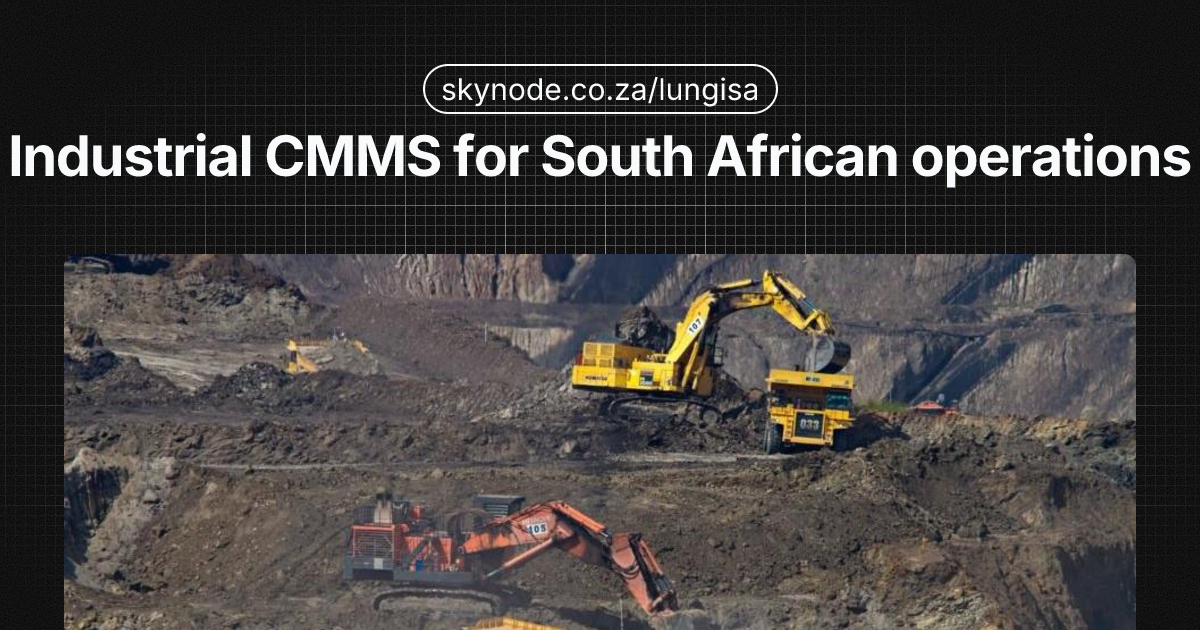
E sa lebelletseng nako e sa sebetseng is one of the largest hidden tšenyehelo/ditshenyegelo in Afrika Borwa meepo, thepa, and thepa. Ha a e bohlokwa thepa stops, you lose more than the ho lokisa bill: you lose tsoalo, pay overtime, rush parts, and sometimes face penalties or tš compliance risk. To justify investment in tlhokomelo, whether a CMMS, preventive programmes, or better spares, you need a clear number. A nako e sa sebetseng tšenyehelo/ditshenyegelo calculator for Afrika Borwa gives you seo. Sena tataiso shows you ho etsa jwang calculate the tšenyehelo/ditshenyegelo of nako e sa sebetseng using a simple formula, Afrika Borwa industry benchmarks, and a worked example in Rands. You can use the result to build a CMMS business case, justify preventive tlhokomelo spend, and prioritise e leng thepa matter most.
Hobaneng a Nako e sa sebetseng Tšenyehelo/Ditshenyegelo Calculator Matters
Putting a number on e sa lebelletseng nako e sa sebetseng turns a vague pain into a decision-making input. Two uses matter most.
For the CMMS Business Case
Tlhokomelo/Taolo and finance want to bona return on investment. A CMMS tšenyehelo/ditshenyegelo licence fees, implementation time, and possibly training. The payoff is fewer e sa lebelletseng maemo a arohaneng, faster ho lokisa ha they happen, and better tš compliance. To show seo the payoff exceeds the tšenyehelo/ditshenyegelo, you need an estimate of how much each hour of nako e sa sebetseng tšenyehelo/ditshenyegelo today. Multiply seo by the number of hours you expect to save (through better PM, faster taelo/taelo ya mosebetsi, and smarter spares), and you have the benefit side of the ROI equation. Ntle le a nako e sa sebetseng tšenyehelo/ditshenyegelo figure, the business case stays qualitative and easy to dismiss.
For Budget Justification
Tlhokomelo competes le tsoalo, projects, and tšenyehelo/ditshenyegelo-cutting. Ha you ask bakeng sa tse ngata preventive tlhokomelo, better spares, or additional mosebetsi o tsebileng/basebetsi ba tsebileng, the question is: eng do we get back? The tšenyehelo/ditshenyegelo of nako e sa sebetseng is the denominator: if one e bohlokwa maemo a arohaneng tšenyehelo/ditshenyegelo R500,000 and you can avoid two such maemo a arohaneng per year le a structured PM program, the benefit is R1 million. Seo makes it easier to justify the budget for PM labour, parts, and the tsamaiso/ditsamaiso seo thulaganyo/reriloe and track the work. Our tataiso on eng is CMMS in Afrika Borwa explains how a CMMS supports seo scheduling and tracking so the investment in tlhokomelo is visible and measurable.
The Nako e sa sebetseng Tšenyehelo/Ditshenyegelo Formula
The true tšenyehelo/ditshenyegelo of e sa lebelletseng nako e sa sebetseng is the sum of several components. Miss any of them and you understate the number.
Total tšenyehelo/ditshenyegelo of nako e sa sebetseng (per incident or per hour) = Lost tsoalo + Labour + Parts and emergency tšenyehelo/ditshenyegelo + Penalties and tš compliance + Reputation (moo applicable)
Each component is defined below, le ho etsa jwang calculate it and eng to watch for in Afrika Borwa conditions.
Lost Tsoalo
Ha the thepa is down, you are not making saleable output. Lost tsoalo tšenyehelo/ditshenyegelo is the margin you would have earned on the units you did not produce (or the tšenyehelo/ditshenyegelo of buying replacement product if you have contractual commitments). Formula:
Lost tsoalo = (Output per hour ha running) × (Nako e sa sebetseng hours) × (Contribution margin per unit)
Use contribution margin (revenue minus variable tšenyehelo/ditshenyegelo), not full tšenyehelo/ditshenyegelo, so you reflect the actual economic loss. Example: a packaging line produces 5,000 units per hour; contribution margin is R12 per unit; nako e sa sebetseng is 4 hours. Lost tsoalo = 5,000 × 4 × R12 = R240,000.
For process plants or meepo, output might be tonnes per hour or ounces per shift. Use the same logic: throughput rate × nako e sa sebetseng × margin per unit of output.
Labour
During the stoppage, you pay people who would otherwise be productive, plus any overtime or call-out premiums. Include:
- Wages for idle tsoalo staff (if they cannot be redeployed).
- Tlhokomelo labour: mosebetsi o tsebileng/basebetsi ba tsebileng, planners, and supervisors engaged in the ho lokisa.
- Overtime or standby pay if the ho lokisa happens outside normal hours.
Labour tšenyehelo/ditshenyegelo = (Hours of nako e sa sebetseng or ho lokisa time) × (Fully loaded labour rate) × (Number of people involved)
Fully loaded means wages plus benefits, leave, and overhead. If two mosebetsi o tsebileng/basebetsi ba tsebileng work 4 hours each at R350/hour fully loaded, labour = 8 × R350 = R2,800. For overtime, use the actual premium (e.g. 1.5× or 2×) so the number reflects real tšenyehelo/ditshenyegelo.
Parts and Emergency Tšenyehelo/Ditshenyegelo
Ho lokisa often need parts. In a maemo a arohaneng, you may pay more than planned:
- List theko or standard tšenyehelo/ditshenyegelo of parts used.
- Expedited shipping (airfreight, courier) to get parts faster.
- Moebedi/Baebedi or specialist labour at premium rates ha internal capacity is insufficient.
Parts and emergency tšenyehelo/ditshenyegelo = Tšenyehelo/Ditshenyegelo of parts + Expedited shipping + Moebedi/Baebedi premiums
Track these separately so you can bona how much e sa lebelletseng nako e sa sebetseng is inflated by urgency. Many Afrika Borwa ditshebetso face long lead times for imported spares; expedited shipping can double or triple the part tšenyehelo/ditshenyegelo.
Penalties and Tš compliance
Some nako e sa sebetseng triggers contractual or regulatory tšenyehelo/ditshenyegelo:
- Customer or tenant SLAs, Late delivery or service credits. Commercial property managers often face lease clauses seo grant tenants rent rebates or credits ha HVAC, lifts, or power fail bakeng sa tse ngata than a defined period.
- Regulatory penalties, Tlasa the OHS Act or, in meepo, the MHSA, maemo a arohaneng to maintain thepa can lead to improvement notices, fines, or prohibition. The direct tšenyehelo/ditshenyegelo is the fine or remediation; the indirect tšenyehelo/ditshenyegelo is lost tsoalo or reputation while you fix the issue.
- Penalties in supply contracts, If you supply a customer tlasa a just-in-time or penalty clause, late delivery can incur per-day or per-unit penalties.
Penalties and tš compliance = SLA credits + Regulatory fines or remediation + Contract penalties
Estimate from your contracts and from known cases in your sector. Even if you have not been fined yet, include a reasonable probability-weighted amount for tš compliance risk ha the maemo a arohaneng is linked to poor tlhokomelo.
Reputation
Hard to quantify but real: repeated maemo a arohaneng or high-profile incidents can damage relationships le customers, tenants, or regulators. For the nako e sa sebetseng tšenyehelo/ditshenyegelo calculator, you can leave reputation as a qualitative note unless you have a way to estimate lost future revenue or tender disqualification. For e bohlokwa thepa in polokeho-sensitive industries, the reputational tšenyehelo/ditshenyegelo of a single serious incident can exceed years of tlhokomelo investment.
Ho etsa jwang Calculate Each Component: Practical Steps
- Choose an thepa or line, Start le one e bohlokwa thepa or tsoalo line moo you have data or can make reasonable assumptions.
- Get throughput and margin, From tsoalo or finance: output per hour (or per shift) and contribution margin per unit. If margin is not available, use revenue per unit minus variable tšenyehelo/ditshenyegelo.
- Estimate typical nako e sa sebetseng duration, Use history if you have it (e.g. from taelo/taelo ya mosebetsi or shift logs). If not, use industry benchmarks or ask tlhokomelo and tsoalo for a range. Our MTBF and MTTR tataiso for Afrika Borwa explains ho etsa jwang calculate mean time to ho lokisa so you can use MTTR as the expected ho lokisa duration.
- Labour, Count who is involved (tsoalo idle, tlhokomelo, moebedi/baebedi) and for how long. Apply fully loaded rates and overtime factors.
- Parts and urgency, For recent maemo a arohaneng, use actual parts tšenyehelo/ditshenyegelo and any expedited or moebedi/baebedi tšenyehelo/ditshenyegelo. For a generic estimate, use average ho lokisa tšenyehelo/ditshenyegelo per maemo a arohaneng from history, or assume a percentage of lost tsoalo (e.g. 5–15% for parts and labour on top of tsoalo loss).
- Penalties, Check SLAs and contracts; add a line for regulatory risk if the thepa is polokeho or tš compliance-e bohlokwa.
- Sum and express per hour, Total tšenyehelo/ditshenyegelo ÷ nako e sa sebetseng hours = tšenyehelo/ditshenyegelo per hour of nako e sa sebetseng. Use sena for business cases and prioritisation.
Afrika Borwa Industry Benchmarks
Benchmarks help you sense-check your number and compare across sites. Ranges below are indicative and depend on thepa criticality, margin, and labour rates.
| Sector | Typical tšenyehelo/ditshenyegelo of nako e sa sebetseng (R per hour) | Notes |
|---|---|---|
| Meepo (gold shaft, e bohlokwa hoist or mill) | R500,000 – R2,000,000+ | High throughput value; entire shaft or feberi/thepa can stop. |
| Thepa (automated line) | R50,000 – R500,000 | Depends on line speed, margin, and whether other lines can compensate. |
| Thepa (single machine or cell) | R5,000 – R50,000 | Lower throughput; labour and parts dominate. |
| Commercial property (HVAC, lifts, power) | Tenant SLA penalties + reputational | Often expressed as rent rebates or credits per hour of maemo a arohaneng. |
Use these as a sanity check: if your calculation is far outside the range for your sector, revisit throughput, margin, or labour assumptions.
Hidden Tšenyehelo/Ditshenyegelo of E sa lebelletseng Nako e sa sebetseng
Beyond the formula, several tšenyehelo/ditshenyegelo are easy to miss.
- Overtime and fatigue, Repeated emergency call-outs increase overtime and can lead to fatigue, errors, and higher turnover. Factor in overtime premium and, moo relevant, the tšenyehelo/ditshenyegelo of mistakes or follow-up ho lokisa.
- Expedited shipping, Airfreight and express couriers for spares can add 50–200% to parts tšenyehelo/ditshenyegelo. Track sena separately so you can justify holding e bohlokwa spares on site.
- Moebedi/Baebedi premiums, External specialists often charge more for emergency call-outs. Include these in “parts and emergency tšenyehelo/ditshenyegelo.”
- Cascading maemo a arohaneng, One maemo a arohaneng can cause another (e.g. a pump maemo a arohaneng leads to overheating and bearing damage elsewhere). Moo you have seen sena pattern, add a factor or document it as a risk in the business case.
- Tš compliance penalties, Tlasa the OHS Act and MHSA, inadequate tlhokomelo can result in improvement notices, fines, or prohibition. Even one notice can tšenyehelo/ditshenyegelo more than a year of CMMS licence fees. Include a probability-weighted estimate for high-consequence thepa.
Worked Example: Packaging Line in Gauteng
A food manufacturer runs a packaging line seo produces 4,000 units per hour. Contribution margin is R18 per unit. The line has an e sa lebelletseng stoppage ha a drive motor fails. Ho lokisa takes 6 hours.
Lost tsoalo: 4,000 × 6 × R18 = R432,000
Labour: Two tlhokomelo mosebetsi o tsebileng/basebetsi ba tsebileng, 6 hours each at R320/hour fully loaded; one hour overtime each at 1.5×. (5 × R320 × 2) + (1 × R480 × 2) = R3,200 + R960 = R4,160
Parts: New motor R28,000; expedited delivery R6,000. R34,000
Moebedi/Baebedi: None; internal ho lokisa. R0
Penalties: No SLA for sena product. R0
Total tšenyehelo/ditshenyegelo of sena nako e sa sebetseng incident: R432,000 + R4,160 + R34,000 = R470,160
Tšenyehelo/Ditshenyegelo per hour of nako e sa sebetseng: R470,160 ÷ 6 ≈ R78,360/hour
If sena line has three similar e sa lebelletseng stoppages per year, the annual tšenyehelo/ditshenyegelo of nako e sa sebetseng for sena thepa alone is about R1.4 million. Reducing seo by even one incident per year through better preventive tlhokomelo or faster diagnosis (e.g. le procedures and spares from a CMMS) can justify a substantial tlhokomelo and tsamaiso/ditsamaiso investment. For more on shifting from reactive to planned work, bona preventive vs reactive tlhokomelo in Afrika Borwa.
Ho etsa jwang Use the Number
Once you have a tšenyehelo/ditshenyegelo of nako e sa sebetseng (per incident or per hour), use it in three ways.
- Build the CMMS business case, Estimate how many hours of e sa lebelletseng nako e sa sebetseng a CMMS could avoid (e.g. through on-time PM and fewer repeat maemo a arohaneng) and how much faster ho lokisa could be (through taelo/taelo ya mosebetsi clarity, procedures, and spares visibility). Multiply by your tšenyehelo/ditshenyegelo per hour to get annual benefit. Compare to CMMS tšenyehelo/ditshenyegelo over the same period.
- Justify PM investment, Compare the tšenyehelo/ditshenyegelo of additional preventive tlhokomelo (labour, parts, scheduling) to the tšenyehelo/ditshenyegelo of one or two avoided maemo a arohaneng. If one maemo a arohaneng tšenyehelo/ditshenyegelo R400,000 and your PM program tšenyehelo/ditshenyegelo R150,000 per year and prevents two such maemo a arohaneng, the ROI is clear.
- Prioritise e bohlokwa thepa, Rank thepa by nako e sa sebetseng tšenyehelo/ditshenyegelo (frequency × tšenyehelo/ditshenyegelo per incident). Focus PM, spares, and procedure improvements on the top of the list. Thepa le high tšenyehelo/ditshenyegelo of nako e sa sebetseng deserve the most disciplined scheduling and the best data in the CMMS.
How a CMMS Reduces the Tšenyehelo/Ditshenyegelo of Nako e sa sebetseng
A computerised tlhokomelo tlhokomelo/taolo tsamaiso/ditsamaiso does not eliminate maemo a arohaneng, but it reduces their frequency and shortens their duration.
- PM scheduling, Taelo/Taelo ya mosebetsi are generated from time- or usage-based schedules so preventive tasks are not forgotten. More PM completed on time means fewer e sa lebelletseng maemo a arohaneng. Sena is the main lever for reducing the number of nako e sa sebetseng incidents.
- Faster taelo/taelo ya mosebetsi, Requests are logged, assigned, and tracked in one place. Mosebetsi o tsebileng/Basebetsi ba tsebileng bona priority, procedure, and e hlokahalang parts. Less time is lost searching for information or parts, so MTTR falls. Our MTBF and MTTR tataiso shows ho etsa jwang track and improve these metrics using CMMS data.
- Ditho tsa spare availability, Ha parts are linked to thepa and taelo/taelo ya mosebetsi, and reorder points are set, e bohlokwa spares are more likely to be on site ha needed. Seo cuts expedited shipping and shortens ho lokisa time.
- Analytics, Maemo a arohaneng and ho lokisa history in the CMMS reveals patterns: e leng thepa fail most, e leng maemo a arohaneng types recur, and moo PM is slipping. Seo supports better prioritisation and continuous improvement.
Calculating the tšenyehelo/ditshenyegelo of nako e sa sebetseng gives you the number you need to justify investing in the processes and tsamaiso/ditsamaiso seo reduce it. Start le one e bohlokwa thepa or line, apply the formula, and use the result to build your CMMS business case, justify PM spend, and focus improvement moo it pays most. For a clear overview of eng a CMMS is and how it fits into tlhokomelo tlhokomelo/taolo in Afrika Borwa, bona eng is CMMS in Afrika Borwa. Bona how Lungisa helps Afrika Borwa ditshebetso track taelo/taelo ya mosebetsi, PM tš compliance, and nako e sa sebetseng so you can use your nako e sa sebetseng tšenyehelo/ditshenyegelo calculator to reduce the real tšenyehelo/ditshenyegelo of e sa lebelletseng maemo a arohaneng. Explore Lungisa to get started.
E ngotsweng ke
Lungisa Team