
Tlhokomelo e Bolellang Afrika Borwa: Tataiso e Bolellang
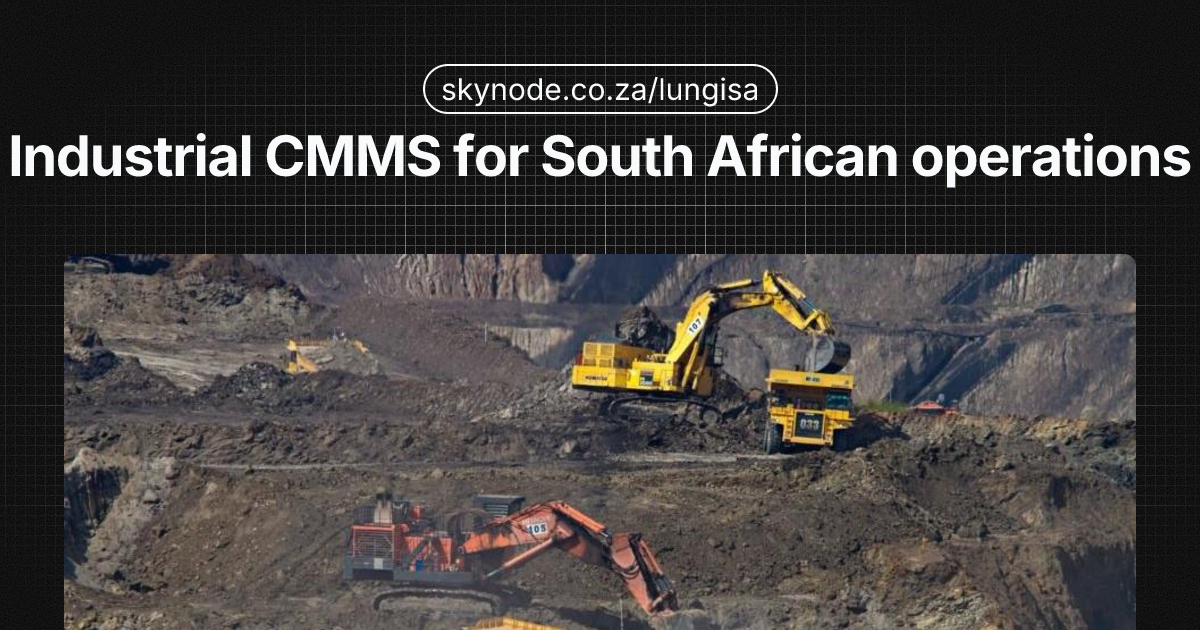
E sa lebelletseng maemo a arohaneng tšenyehelo/ditshenyegelo Afrika Borwa meepo and thepa ditshebetso heavily: lost tsoalo, emergency ho lokisa, and in hazardous environments, heightened polokeho risk. Ha a winder, compressor, or e bohlokwa conveyor fails ntle le warning, the bill runs into hundreds of thousands of rand and tš compliance exposure rises. Predictive tlhokomelo in Afrika Borwa is increasingly on the table as a way to intervene pele maemo a arohaneng, but only if it is grounded in reality.
Sena tataiso explains eng predictive tlhokomelo is, how it differs from preventive and reactive approaches, e leng technologies are in play, and eng adoption looks like locally. It sets out a realistic roadmap: hobaneng you need a solid CMMS and good data first, ho etsa jwang phase in condition monitoring, and ho etsa jwang handle load-shedding, connectivity, and skills. The goal is to help you decide eng makes sense for your operation and in eng order.
Eng is Predictive Tlhokomelo?
Predictive tlhokomelo (PdM) is a condition-based, data-driven approach: you monitor thepa health in real time or at nako/dinako and intervene ha indicators show seo maemo a arohaneng is likely, rather than on a fixed thulaganyo/reriloe or only kamorao a maemo a arohaneng. It sits between reactive tlhokomelo (fix ha it breaks) and time-based preventive tlhokomelo (fix on a calendar or run-hours thulaganyo/reriloe).
Condition-based and data-driven
In practice, predictive tlhokomelo in Afrika Borwa usually involves:
- Condition data, Vibration, temperature, oil quality, acoustic or ultrasonic signatures, or electrical parameters are collected from thepa.
- Trends and thresholds, Data is compared to baselines or limits; ha readings cross a threshold or show a clear deterioration trend, a taelo/taelo ya mosebetsi or alert is generated.
- Intervention pele maemo a arohaneng, Tlhokomelo is thulaganyo/reriloe in a planned window instead of in response to an unexpected stoppage.
The benefit is seo you avoid both the tšenyehelo/ditshenyegelo of unnecessary time-based PM (replacing parts seo are still good) and the tšenyehelo/ditshenyegelo of reactive ho lokisa (nako e sa sebetseng, secondary damage, emergency labour). For a fuller comparison of strategies, bona our tataiso on preventive vs reactive tlhokomelo in Afrika Borwa.
Predictive vs preventive vs reactive
| Approach | Trigger | Ha you act | Typical use |
|---|---|---|---|
| Reactive | Maemo a arohaneng | Kamorao maemo a arohaneng | Non-e bohlokwa or low-tšenyehelo/ditshenyegelo thepa |
| Preventive | Time or usage | On thulaganyo/reriloe (e.g. every 500 hours) | Most thepa; foundation of planned tlhokomelo |
| Predictive | Condition data | Ha indicators show degradation | E bohlokwa thepa moo data and skills justify it |
Predictive does not replace preventive tlhokomelo. It refines ha you do the work for a subset of e bohlokwa thepa. The rest of the feberi/thepa usually stays on preventive (and some items may remain reactive by design). Getting preventive vs reactive right first is a prerequisite pele layering on predictive.
Technologies Used in Predictive Tlhokomelo
The main condition-monitoring technologies seo support predictive tlhokomelo in Afrika Borwa are well established; choice depends on thepa type, maemo a arohaneng modes, and budget.
Vibration analysis
Vibration sensors (accelerometers) on rotating thepa, pumps, motors, fans, gearboxes, capture frequency and amplitude. Changes in pattern or level often indicate bearing wear, misalignment, imbalance, or looseness. Portable handheld devices are used for route-based collection; permanent sensors allow continuous monitoring. Vibration is especially relevant for meepo mobile thepa, compressors, and e bohlokwa rotating feberi/thepa in thepa.
Oil analysis
Oil samples are sent to a lab (or analysed on-site) for wear metals, contamination, viscosity, and additive condition. The results indicate internal wear, ingress of dirt or coolant, and whether oil is fit for further use. Oil analysis is common for diesel engines (e.g. haul trucks, generators), hydraulic tsamaiso/ditsamaiso, and gearboxes. It is often combined le run-hour or calendar triggers rather than real-time sensors.
Thermography
Thermal imaging cameras detect temperature differences. Hot spots can indicate electrical faults, poor connections, blocked cooling, or failing bearings. Thermography is widely used for electrical switchgear, motor connections, and HVAC in commercial buildings. It is typically done at nako/dinako (e.g. kgweding e nngwe le e nngwe) unless cameras are fixed in place.
Ultrasonic testing
Ultrasonic sensors pick up high-frequency sounds seo indicate leaks (air, steam, refrigerant), partial discharge in electrical thepa, or early bearing defects. Handheld devices are used for teko/diteko; permanent sensors can be installed for continuous monitoring of e bohlokwa points.
IoT sensors and connectivity
Sensors can be wired or wireless; data is sent to a platform or CMMS for trending and alerts. In Afrika Borwa, connectivity is a real constraint: underground meepo, remote plants, and load-shedding affect both power and network availability. Predictive tlhokomelo seo Afrika Borwa ditshebetso adopt often starts le e bohlokwa thepa in areas le reliable power and connectivity, or le battery-backed sensors seo store and forward data ha the link is restored.
Generative AI for diagnostics is emerging: algorithms seo help interpret vibration, thermography, or combined data to suggest maemo a arohaneng modes and remaining useful life. Sena is still early for many local ditshebetso but is likely to become more accessible as platforms mature.
Adoption in Afrika Borwa: Eng the Data Suggests
Afrika Borwa meepo has been a leading adopter of condition monitoring. Industry surveys and vendor phuputso/liphuputso suggest seo a large majority of SA meepo companies have invested in predictive or condition-based tlhokomelo for mobile thepa (haul trucks, loaders, drills) and e bohlokwa fixed feberi/thepa. The driver is clear: e sa lebelletseng nako e sa sebetseng in a mine is extremely expensive, and mobile thepa is both e bohlokwa and well-suited to onboard sensors and telemetry.
Thepa and thepa are adopting at different speeds. Compressors, large motors, and process thepa are common candidates for vibration or oil analysis. Commercial HVAC and electrical infrastructure are often covered by thermography and thulaganyo/reriloe condition checks rather than full IoT deployment. Overall, predictive tlhokomelo in Afrika Borwa is growing, but many sites are still building the foundation: consistent preventive tlhokomelo, thepa registers, and maemo a arohaneng history in a CMMS.
Prerequisites: You Need Good Data First
Predictive tlhokomelo depends on data. If you do not have a reliable tsediso/ditshediso of eng was done, ha, and eng failed, condition data alone is hard to interpret. You need to know an thepa’s tlhokomelo history, maemo a arohaneng codes, and ho lokisa actions to correlate sensor trends le real events and to train or tune models.
CMMS as the foundation
A CMMS (computerised tlhokomelo tlhokomelo/taolo tsamaiso/ditsamaiso) is moo taelo/taelo ya mosebetsi, preventive schedules, thepa history, and maemo a arohaneng codes live. It is the tsamaiso/ditsamaiso of tsediso/ditshediso for tlhokomelo. Ntle le it:
- You cannot reliably link a vibration spike or oil result to a specific ho lokisa or component change.
- You cannot measure baseline performance (e.g. MTBF, MTTR) pele and kamorao introducing predictive work.
- You cannot prioritise e leng thepa deserve condition monitoring, seo prioritisation comes from knowing e leng thepa fail most often, tšenyehelo/ditshenyegelo the most nako e sa sebetseng, or carry the highest polokeho or tš compliance risk.
For meepo ditshebetso, seo foundation includes statutory tš compliance and offline capability; bona CMMS for meepo in Afrika Borwa for eng a meepo CMMS must deliver. For a deeper view of the metrics seo underpin improvement, bona our MTBF and MTTR tataiso for Afrika Borwa. In short: garbage in, garbage out. Predictive analytics on top of missing or messy tlhokomelo data rarely delivers; a solid CMMS and disciplined execution come first.
Thepa history and maemo a arohaneng codes
To make predictive tlhokomelo worthwhile you need:
- Accurate thepa register, The right thepa, correctly identified, so sensor data and taelo/taelo ya mosebetsi align.
- Consistent maemo a arohaneng coding, Ha something fails, mosebetsi o tsebileng/basebetsi ba tsebileng log a standard maemo a arohaneng code and cause. Over time, patterns (e.g. bearing maemo a arohaneng every X hours) inform both PM and predictive thresholds.
- Completed work history, Eng was done, ha, and e leng parts were used. Seo history validates whether a predicted maemo a arohaneng actually occurred and whether the intervention was effective.
If your team is still on paper or spreadsheets, or if taelo/taelo ya mosebetsi are often completed ntle le proper coding, the first step is to implement or tighten the CMMS and get PM tš compliance and history in place. Only then does layering on condition monitoring and predictive analytics pay off.
Hobaneng CMMS comes first
Predictive tlhokomelo in Afrika Borwa succeeds only ha the base is solid. The CMMS is moo you define thepa, thulaganyo/reriloe PM, tsediso/ditshediso maemo a arohaneng and ho lokisa, and track tš compliance. Ntle le seo, condition data is hard to act on and hard to learn from. Invest first in a CMMS seo fits your sector, meepo, thepa, or thepa, and in getting PM tš compliance and history right. Then add condition monitoring and predictive layers moo the economics and the data justify it. For meepo, seo means a tsamaiso/ditsamaiso seo supports MHSA and offline use; for thepa and thepa, one seo supports OHS Act dinyehelo and your e bohlokwa thepa list.
A Realistic Roadmap for Afrika Borwa Ditshebetso
A phased approach keeps risk and tšenyehelo/ditshenyegelo manageable and aligns le how many Afrika Borwa sites actually adopt predictive tlhokomelo.
Phase 1: CMMS and PM tš compliance
Implement or stabilise your CMMS. All e bohlokwa and semi-e bohlokwa thepa should be in the tsamaiso/ditsamaiso le taelo/taelo ya mosebetsi, PM schedules (time- or usage-based), and completion recorded. Mosebetsi o tsebileng/Basebetsi ba tsebileng should use maemo a arohaneng codes and basic cause fields. Aim for high PM tš compliance (e.g. work done on time) and a growing history of maemo a arohaneng and ho lokisa.
Sena phase typically takes six to eighteen months depending on site size and starting point. Until sena is in place, predictive tlhokomelo will lack the context to be reliable.
Phase 2: Condition monitoring on e bohlokwa thepa
Select a small set of e bohlokwa thepa, e.g. a winding tsamaiso/ditsamaiso, a key compressor, or a e bohlokwa conveyor drive, and introduce condition monitoring. Options include:
- Route-based collection, Mosebetsi o tsebileng/Basebetsi ba tsebileng use handheld vibration or thermal devices on a regular route; data is uploaded and trended.
- Oil analysis, Samples taken at PM or at defined nako/dinako and sent to a lab; results entered into the CMMS or a dedicated platform.
Set baselines, define alert thresholds, and generate taelo/taelo ya mosebetsi ha limits are exceeded. Integrate le the CMMS so seo condition alerts create taelo/taelo ya mosebetsi and completion is recorded against the thepa. Sena phase proves the process and builds internal capability ntle le a large IoT rollout.
Phase 3: IoT integration
Moo justified by criticality and connectivity, add permanent sensors (vibration, temperature, or other) seo stream or batch-upload data to a platform. Alerts and taelo/taelo ya mosebetsi can be created automatically. Focus on thepa moo e sa lebelletseng maemo a arohaneng is very costly and moo power and network are adequate, or use store-and-forward and battery-backed devices moo needed. Integration le the CMMS remains e bohlokwa so seo all tlhokomelo, preventive and predictive, is in one place.
Phase 4: Predictive analytics
Le sufficient history and condition data, you can move from threshold-based alerts to more advanced analytics: trend-based predictions, remaining-useful-life estimates, or AI-assisted diagnostics. Sena phase is for ditshebetso seo already have Phases 1–3 in place and want to squeeze more value from their data. It is not a starting point.
Tšenyehelo/Ditshenyegelo and ROI
Tšenyehelo/Ditshenyegelo depend on scope. A CMMS is a prerequisite and has its own licence and implementation tšenyehelo/ditshenyegelo. Condition monitoring adds:
- Portable route-based, Handheld devices, software, and mosebetsi o tsebileng/basebetsi ba tsebileng time per route. Lower capital; ongoing labour.
- Permanent sensors and IoT, Sensors, gateways, connectivity, and software. Higher capital; less manual collection.
- Oil analysis, Per-sample lab tšenyehelo/ditshenyegelo plus internal handling.
- Thermography, Camera purchase or outsourced surveys at nako/dinako.
ROI typically comes from a few avoided e sa lebelletseng maemo a arohaneng per year on e bohlokwa thepa: reduced nako e sa sebetseng, less secondary damage, and fewer emergency call-outs. Meepo mobile thepa and large compressors or process mesebetsi often justify the investment quickly; non-e bohlokwa thepa may not. Calculating ROI requires knowing your current tšenyehelo/ditshenyegelo of e sa lebelletseng nako e sa sebetseng (tsoalo loss, labour, parts) and estimating how many maemo a arohaneng predictive tlhokomelo could prevent or delay. The MTBF and MTTR tataiso helps you baseline current performance so you can measure improvement.
Challenges in the Afrika Borwa Context
Local conditions affect how and moo predictive tlhokomelo is practical.
Connectivity
Underground mines, remote plants, and some thepa floors have poor or no cellular or Wi-Fi coverage. IoT sensors seo assume always-on connectivity will fail or leave gaps. Options include local gateways seo store and forward ha connectivity is available, or concentrating predictive technology on thepa in areas le reliable links.
Load-shedding
Power cuts affect server and gateway uptime, sensor power, and the ability of staff to access cloud tsamaiso/ditsamaiso. Battery-backed or UPS-backed thepa and offline-capable CMMS and data capture become e bohlokwa. Prioritise e bohlokwa monitoring so seo the most e bohlokwa thepa remain covered during outages.
Skills
Interpreting vibration spectra, thermography, or oil phuputso/liphuputso requires trained people. Afrika Borwa faces a skills shortage in tlhokomelo and engineering. Training and retention matter; so does choosing technologies seo your team can support or seo can be outsourced (e.g. lab-based oil analysis, contracted thermography) until internal capability is built.
Tšenyehelo/Ditshenyegelo of sensors and platforms
Sensors, gateways, and analytics platforms have upfront and ongoing tšenyehelo/ditshenyegelo. Start le a small number of e bohlokwa thepa and proven technologies (e.g. vibration on rotating thepa, oil analysis on engines) rather than a site-wide rollout. Prove value, then expand.
Bona how Lungisa gives Afrika Borwa ditshebetso the taelo/taelo ya mosebetsi, PM, and thepa-history foundation seo predictive tlhokomelo in Afrika Borwa builds on, including offline mode for sites affected by load-shedding or poor connectivity. Explore Lungisa.
E ngotsweng ke
Lungisa Team