
Template ya Taelo ya Mosebetsi Afrika Borwa
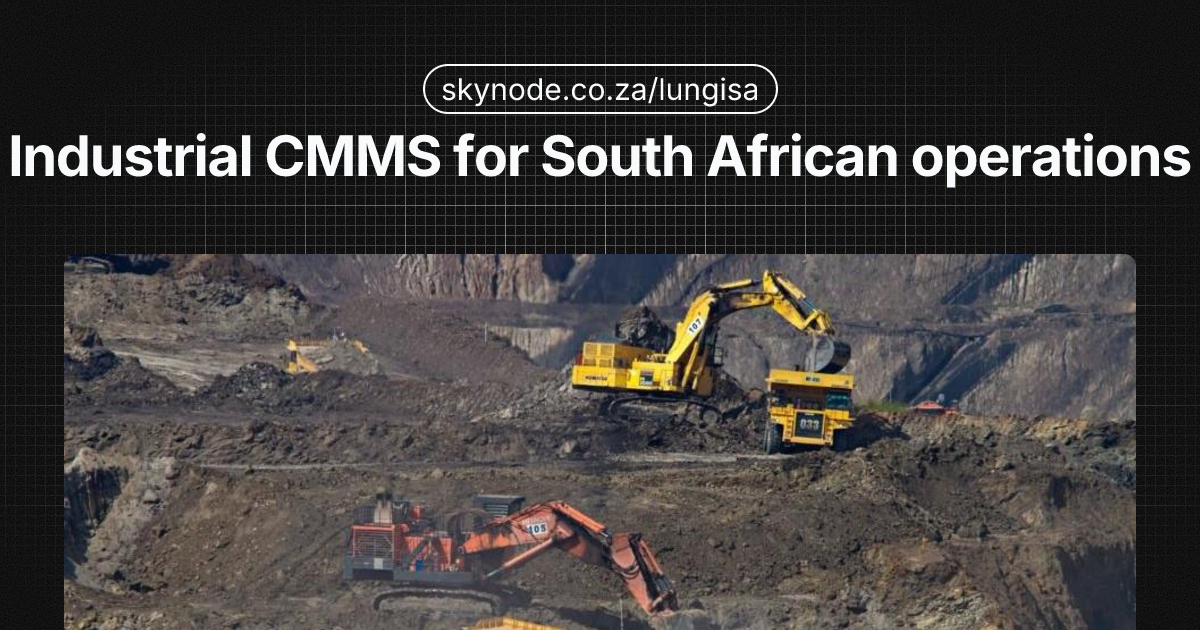
Vague job cards, missed priorities, and no audit trail ha a DMR or OHS molaudi/ba-audit asks for bopaki of tlhokomelo, seo is eng you get ha taelo/taelo ya mosebetsi are ad hoc. In Afrika Borwa meepo and thepa, e sa lebelletseng nako e sa sebetseng can run to tens of thousands of rand per hour, and tš compliance maemo a arohaneng carry real penalties. A taelo/taelo ya mosebetsi template/ditemplate seo captures who, eng, moo, ha, and how is the foundation for traceable tlhokomelo and defensible tsediso/ditshediso. Sena tataiso explains eng a taelo/taelo ya mosebetsi is, hobaneng it matters for polokeho and tš compliance, and gives you a free taelo/taelo ya mosebetsi template/ditemplate for Afrika Borwa ditshebetso, including fields for the OHS Act and MHSA.
If you are still using handwritten notes or a basic spreadsheet, a standard taelo/taelo ya mosebetsi template/ditemplate is the first step toward consistent, auditable tlhokomelo. From there, many teams move to a CMMS to automate scheduling and reporting; sena template/ditemplate gives you a solid foundation either way.
Eng Is a Work Order and Hobaneng It Matters
A taelo/taelo ya mosebetsi is a formal instruction to perform tlhokomelo on a specific thepa or location. It captures who requested the work, eng needs to be done, who is responsible, ha it should happen, and how it was completed. In Afrika Borwa meepo, thepa, and thepa, taelo/taelo ya mosebetsi are not just administrative, they are the bopaki seo you maintained feberi/thepa and thepa in a safe condition, as e hlokahalang by the Occupational Health and Polokeho Act (OHS Act) and, in meepo, the Mine Health and Polokeho Act (MHSA).
Ntle le a standard taelo/taelo ya mosebetsi template/ditemplate, teams often rely on handwritten job cards, WhatsApp messages, or rows in a shared spreadsheet. The result is missing details, no clear priority, and no reliable tsediso/ditshediso ha an molaudi/ba-audit or auditor asks for bopaki. A consistent taelo/taelo ya mosebetsi form ensures every job has the same information so planners can thulaganyo/reriloe effectively, mosebetsi o tsebileng/basebetsi ba tsebileng know eng to do, and managers can phuputso/liphuputso on backlog, completion rates, and tšenyehelo/ditshenyegelo.
Anatomy of a Good Work Order Template/Ditemplate
A good taelo/taelo ya mosebetsi template/ditemplate includes the following fields. Each one serves a specific purpose in planning, execution, and tsediso/ditshediso-keeping.
| Field | Purpose |
|---|---|
| Taelo/Taelo ya mosebetsi number | Unique ID for reference, reporting, and audit trail. |
| Request date | Ha the work was requested or generated (e.g. from a PM thulaganyo/reriloe). |
| Requester | Name or department seo requested or created the taelo/taelo ya mosebetsi. |
| Thepa | Thepa or location to be maintained (from your thepa register). |
| Location | Physical place (building, area, site) moo the work is done. |
| Priority | Urgency: e.g. E bohlokwa, High, Medium, Low, drives scheduling. |
| Type | Corrective, preventive, or regulatory, determines how the work was triggered. |
| Description | Clear scope of work: eng to do, eng to check, eng to ho lokisa. |
| Assigned mosebetsi o tsebileng/basebetsi ba tsebileng | Person responsible for executing the work. |
| Planned start / end | Thulaganyo/Reriloe window for the work. |
| Parts needed | List of spares or materials e hlokahalang (and ideally reserved). |
| Polokeho permits | Hot work, confined space, lockout, or other permit references. |
| Completion notes | Eng was done, parts used, time spent, findings. |
| Sign-off | Mosebetsi o tsebileng/Basebetsi ba tsebileng and (if e hlokahalang) supervisor approval to close the order. |
These fields cover the full lifecycle: request, planning, execution, and close-out. For Afrika Borwa ditshebetso, you will often add regulatory fields (bona below).
Free Work Order Template/Ditemplate (Markdown Table)
You can use sena taelo/taelo ya mosebetsi template/ditemplate as a checklist or copy it into a spreadsheet. Fill one row per taelo/taelo ya mosebetsi; for paper or PDF use, one sheet per job.
| Field | Value |
|---|---|
| Taelo/Taelo ya mosebetsi number | WO-YYYYMMDD-XXX |
| Request date | |
| Requester | |
| Thepa | |
| Location | |
| Priority | E bohlokwa / High / Medium / Low |
| Type | Corrective / Preventive / Regulatory / Emergency |
| Description | |
| Assigned mosebetsi o tsebileng/basebetsi ba tsebileng | |
| Planned start | |
| Planned end | |
| Parts needed | |
| Polokeho permit reference | |
| OHS / MHSA reference | (if applicable) |
| Completion date | |
| Completion notes | |
| Parts used | |
| Mosebetsi o tsebileng/Basebetsi ba tsebileng sign-off | |
| Supervisor sign-off |
Numbering (e.g. WO-20260127-001) keeps taelo/taelo ya mosebetsi unique and sortable. The type field helps you phuputso/liphuputso on corrective vs preventive vs reactive work; the completion and sign-off fields give you the audit trail seo molaudi/ba-audit expect.
Types of Work Orders
Not all taelo/taelo ya mosebetsi are the same. Defining type helps le reporting, tš compliance, and prioritisation.
Corrective Work Orders
Corrective work is triggered by a maemo a arohaneng, defect, or complaint. Something is broken or not working as it should; the taelo/taelo ya mosebetsi describes the fault and the e hlokahalang ho lokisa. Corrective work tends to be urgent and e sa lebelletseng, so the template/ditemplate must capture the problem clearly and the actions taken so you can analyse repeat maemo a arohaneng later.
Preventive Work Orders
Preventive taelo/taelo ya mosebetsi are generated from a thulaganyo/reriloe: beke le beke teko/diteko, kgweding le kgweding lubrication, or meter-based tasks (e.g. every 500 running hours). The description typically comes from a standard job plan or checklist. Using a taelo/taelo ya mosebetsi template/ditemplate for PM ensures each thulaganyo/reriloe task is recorded and can be linked to the thepa history and tš compliance phuputso/liphuputso.
Regulatory / OHS Work Orders
Regulatory taelo/taelo ya mosebetsi cover legally e hlokahalang teko/diteko, tests, or tlhokomelo, for example electrical tš compliance, lifting thepa, or pressure vessel checks. In Afrika Borwa, the OHS Act and MHSA require seo certain thepa be maintained and seo tsediso/ditshediso be kept. Your template/ditemplate should include a field for the regulation or standard (e.g. “OHS Act 85 of 1993, Regulation 6”) and, moo relevant, the teko/diteko type (e.g. MHSA 8.2.2). Seo makes it easy to prove tš compliance during an audit.
Emergency Work Orders
Emergency work is e sa lebelletseng, high-priority corrective work seo requires immediate response. The same template/ditemplate applies, but priority is E bohlokwa and planned start/end may be “as soon as possible.” Capturing emergency work on a standard form still gives you a tsediso/ditshediso of eng was done and hobaneng, e leng is e bohlokwa for incident reviews and tš compliance.
Work Order Workflow: Request to Close
A typical taelo/taelo ya mosebetsi moves through several stages. Your template/ditemplate and your process should support each step.
- Request, Someone phuputso/liphuputso a fault or the tsamaiso/ditsamaiso generates a PM taelo/taelo ya mosebetsi. The requester (or planner) fills in thepa, location, type, description, and priority.
- Approval, Moo e hlokahalang (e.g. high-tšenyehelo/ditshenyegelo ho lokisa, shutdown work), a supervisor or manager approves the taelo/taelo ya mosebetsi pele it is thulaganyo/reriloe.
- Scheduling, The planner assigns a mosebetsi o tsebileng/basebetsi ba tsebileng and sets planned start and end. Parts are reserved or ordered if needed; permits are requested.
- Execution, The mosebetsi o tsebileng/basebetsi ba tsebileng performs the work, follows polokeho procedures, and uses the taelo/taelo ya mosebetsi as the job card. Status is updated to “In progress.”
- Completion, The mosebetsi o tsebileng/basebetsi ba tsebileng fills in completion notes, parts used, and actual time. Photos or attachments can be linked if your tsamaiso/ditsamaiso supports it.
- Sign-off, The mosebetsi o tsebileng/basebetsi ba tsebileng signs off; for e bohlokwa or regulatory work, a supervisor may also sign to confirm the work was done correctly.
- Close, The taelo/taelo ya mosebetsi is closed and the tsediso/ditshediso is retained for thepa history, tšenyehelo/ditshenyegelo reporting, and tš compliance.
Paper or spreadsheet template/ditemplate can support sena workflow, but they rely on discipline: someone must move the job from one stage to the next and file completed orders. A CMMS automates status changes, notifications, and reporting so nothing is left in a drawer or an outdated Excel file.
Common Mistakes Ha Using Work Order Template/Ditemplate
Even le a good template/ditemplate, these mistakes undermine effectiveness and tš compliance.
Vague Descriptions
“Fix the pump” or “Check the conveyor” does not tell a mosebetsi o tsebileng/basebetsi ba tsebileng eng to do. The description should state the fault or task clearly: “Replace mechanical seal on pump P-101; isolate and drain pele disassembly.” Vague taelo/taelo ya mosebetsi lead to wrong scope, repeat visits, and poor thepa history.
No Priority
If every taelo/taelo ya mosebetsi is “High” or nothing is prioritised, planners cannot sequence work and e bohlokwa jobs get delayed. Use a simple scale (E bohlokwa, High, Medium, Low) and apply it consistently so seo urgent and regulatory work is done first.
No Parts Planning
Starting a job ntle le the right spares causes delays and wasted trips. The template/ditemplate should list parts needed; moo possible, reserve them or order in advance. For common PMs, a standard parts list on the job plan reduces sena risk.
No Proper Close-Out
Leaving taelo/taelo ya mosebetsi open or closing them ntle le completion notes and sign-off breaks the audit trail. Molaudi/Ba-audit and internal auditors need to bona eng was done, ha, and by whom. Always complete the completion notes and sign-off fields pele closing the order.
Afrika Borwa–Specific Fields for Your Work Order Template/Ditemplate
For Afrika Borwa ditshebetso, consider adding these fields to your taelo/taelo ya mosebetsi template/ditemplate.
- OHS permit reference, If the work requires a permit to work (e.g. hot work, confined space), tsediso/ditshediso the permit number and validity. Seo links the tlhokomelo tsediso/ditshediso to your polokeho tsamaiso/ditsamaiso.
- MHSA teko/diteko type, In meepo, certain teko/diteko are e hlokahalang tlasa the MHSA. Recording the regulation or teko/diteko type (e.g. 8.2.2) on the taelo/taelo ya mosebetsi helps you prove tš compliance and plan recurring regulatory work.
- B-BBEE morekisi/barekisi (if parts ordered), Ha ditho tsa spare are ordered for the job, recording the morekisi/barekisi and their B-BBEE level supports B-BBEE thepa reporting and verification. Many teams add a simple “Morekisi/Barekisi” and “B-BBEE level” field for taelo/taelo ya mosebetsi seo involve thepa.
These fields do not replace your main template/ditemplate; they extend it so seo one taelo/taelo ya mosebetsi supports both tlhokomelo execution and Afrika Borwa tš compliance and reporting.
Limitations of Paper and Spreadsheet Work Orders
A taelo/taelo ya mosebetsi template/ditemplate in Word, PDF, or Excel is better than no template/ditemplate, but it has limits.
- No single source of truth, Paper gets lost; spreadsheets get copied and edited in parallel. You end up le multiple versions and no guarantee seo the closed job you show an auditor is the only tsediso/ditshediso.
- No automatic scheduling, Preventive taelo/taelo ya mosebetsi must be created by hand or by formula. It is easy to miss a due PM ha there is no tsamaiso/ditsamaiso generating taelo/taelo ya mosebetsi from a thulaganyo/reriloe.
- No mobile access, Mosebetsi o tsebileng/Basebetsi ba tsebileng in the feberi/thepa or on site cannot easily update a paper form or a shared spreadsheet. Delays and incomplete data are common.
- No real-time visibility, Managers cannot bona backlog, overdue work, or completion rates ntle le manually consolidating sheets or files.
- Weak audit trail, Spreadsheets can be edited at any time; paper can be altered. Auditors and molaudi/ba-audit expect a reliable, tamper-resistant tsediso/ditshediso of tlhokomelo.
For small teams or low-risk thepa, a well-used template/ditemplate may be enough. As you scale, add sites, or face stricter tš compliance, the case for moving from spreadsheets to a CMMS becomes strong.
A CMMS (computerised tlhokomelo tlhokomelo/taolo tsamaiso/ditsamaiso) takes the same information as your taelo/taelo ya mosebetsi template/ditemplate and turns it into a live, traceable process. Taelo/Taelo ya mosebetsi are created from requests or from preventive schedules; they are assigned and pushed to mosebetsi o tsebileng/basebetsi ba tsebileng on mobile devices; status is updated in real time; and completion notes, parts, and sign-off are stored in one tsamaiso/ditsamaiso. Phuputso/Liphuputso on backlog, PM tš compliance, and tšenyehelo/ditshenyegelo per thepa come from the same data, and auditors can bona a clear history of eng was maintained, ha, and by whom. Using a standard taelo/taelo ya mosebetsi template/ditemplate today prepares your team for seo transition: the fields you use on paper or in Excel are the same fields a good CMMS will use.
Use the taelo/taelo ya mosebetsi template/ditemplate in sena tatelano as a starting point and customise the fields to your thepa, sites, and tš compliance dinyehelo. To move from paper and spreadsheets to a single, auditable tsamaiso/ditsamaiso for taelo/taelo ya mosebetsi and OHS and MHSA tsediso/ditshediso, bona how Lungisa supports Afrika Borwa ditshebetso.
E ngotsweng ke
Lungisa Team