
CMMS bakeng sa Thepa Afrika Borwa: Fokotsa Nako e sa Sebetseng, Fihlella OHS
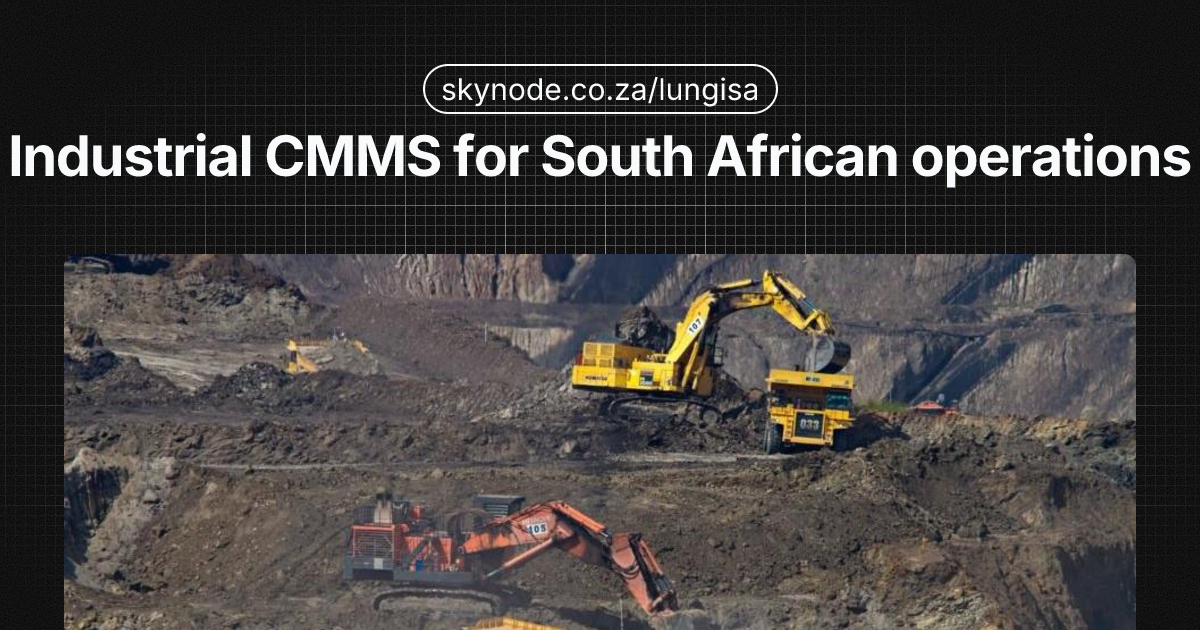
Afrika Borwa manufacturers face a tough combination: ageing thepa, load-shedding damage, a skills gap, and strict OHS Act tš compliance. A CMMS for thepa Afrika Borwa can help. Computerised tlhokomelo tlhokomelo/taolo tsamaiso/ditsamaiso give you thulaganyo/reriloe preventive tlhokomelo, taelo/taelo ya mosebetsi, spare-parts control, and the tsediso/ditshediso molaudi/ba-audit expect, so you reduce e sa lebelletseng nako e sa sebetseng and keep tsoalo running. Sena tatelano explains the tlhokomelo challenges local manufacturers face, hobaneng a CMMS matters, ho etsa jwang use it for tsoalo lines and OHS tš compliance, and ho etsa jwang measure the return.
Thepa Tlhokomelo Challenges in Afrika Borwa
Pele looking at eng a CMMS does, it helps to be clear about the pressures Afrika Borwa manufacturers are tlasa. These shape how you design tlhokomelo and choose tools.
Aging Thepa and Deferred Tlhokomelo
Many plants run mesebetsi seo is decades old. Ditho tsa spare are scarce or obsolete; documentation is missing; and years of tšenyehelo/ditshenyegelo-cutting have left tlhokomelo underfunded. The result is more maemo a arohaneng, longer ho lokisa times, and higher risk ha thepa fails. Ntle le a clear thepa register and planned schedules, teams spend more time firefighting and less on preventive work. A CMMS for thepa Afrika Borwa gives you one place to list thepa, attach procedures, and thulaganyo/reriloe the work seo keeps older feberi/thepa in service.
Load-Shedding and Power Instability
Eskom and municipal supply are unreliable. Ha power drops and returns, voltage spikes and inrush currents damage motors, drives, and control panels. Repeated on-off cycles cause thermal stress and faster wear. Tsoalo restarts kamorao a cut often mean clearing jams, resetting PLCs, and re-establishing process conditions, all of e leng add to the tlhokomelo load. Ditshebetso seo treat load-shedding as a routine risk need tlhokomelo plans seo include surge protection, backup power tlhokomelo, and procedures for controlled shutdown and restart. A CMMS helps you thulaganyo/reriloe and tsediso/ditshediso seo work so it is not forgotten ha the grid goes down.
Skills Gap and Knowledge Loss
Experienced mosebetsi o tsebileng/basebetsi ba tsebileng are retiring or leaving, and finding trained replacements is difficult. Tribal knowledge, ho etsa jwang fix a specific machine, moo the quirks are, often lives in people’s heads, not in procedures. Ha seo knowledge walks out the door, MTTR goes up and quality suffers. A CMMS for thepa Afrika Borwa cannot replace people, but it can capture work instructions, checklists, and history on each thepa so seo the next person has a starting point. Linking procedures and history to thepa in the CMMS slows the loss of knowledge and shortens the learning curve for new staff.
OHS Act and Statutory Tš compliance
The Occupational Health and Polokeho Act 85 of 1993 and its melao (including the General Mesebetsi Melao and Pressure Thepa Melao) require moemployeri/baemployeri to maintain feberi/thepa and thepa and to keep tsediso/ditshediso. Molaudi/Ba-audit can ask eng was maintained, ha, and by whom. Manufacturers seo rely on spreadsheets or paper struggle to produce consistent, tamper-resistant tsediso/ditshediso. Non-tš compliance can mean fines, prohibition notices, or worse. A CMMS built le Afrika Borwa tš compliance in mind lets you thulaganyo/reriloe statutory teko/diteko, tsediso/ditshediso completion, and generate the phuputso/liphuputso molaudi/ba-audit expect. For a full picture of eng the law requires, bona our tataiso on OHS Act tlhokomelo dinyehelo in Afrika Borwa.
Hobaneng Manufacturers Need a CMMS
A CMMS is not just a work-order tsamaiso/ditsamaiso. For thepa, it becomes the backbone for planned tlhokomelo, performance measurement, and tš compliance.
OEE Tracking and Nako e sa sebetseng Visibility
Overall Thepa Effectiveness (OEE) combines availability, performance, and quality. To improve it, you need to know hobaneng machines stop: planned tlhokomelo, maemo a arohaneng, changeovers, or external factors such as load-shedding. A CMMS tsediso/ditshediso taelo/taelo ya mosebetsi, completion times, and maemo a arohaneng reasons. Ha mosebetsi o tsebileng/basebetsi ba tsebileng log maemo a arohaneng and link them to thepa, you can analyse patterns, prioritise e leng thepa needs better preventive vs reactive tlhokomelo, and track whether availability is improving. Ntle le a CMMS, nako e sa sebetseng data is scattered and hard to trust; le it, you can phuputso/liphuputso OEE and act on the causes of loss.
PM Scheduling and Work Orders
Preventive tlhokomelo only works if it is thulaganyo/reriloe and done. A CMMS generates taelo/taelo ya mosebetsi from time-based or usage-based (hours, cycles) schedules, assigns them to mosebetsi o tsebileng/basebetsi ba tsebileng, and tsediso/ditshediso completion. Seo keeps lubrication, teko/diteko, and replacements from slipping. For thepa, PM schedules should cover tsoalo lines, packaging thepa, boilers, compressors, and any thepa seo affects polokeho or quality. Starting le the thepa seo matter most, and the ones seo regulators care about, gives you quick wins. As you add more thepa and schedules, the CMMS becomes the single source of truth for eng is due and eng was done.
Spare Parts and Inventory
Maemo a arohaneng often wait on parts. If e bohlokwa spares are not on site or not findable, MTTR stretches and tsoalo suffers. A CMMS lets you attach parts to thepa and taelo/taelo ya mosebetsi, track stock levels, and set reorder points. Ha a taelo/taelo ya mosebetsi is raised, the mosebetsi o tsebileng/basebetsi ba tsebileng or planner can bona eng parts are needed and whether they are in stock. Over time, usage history helps you decide eng to keep on the shelf and eng to order only ha needed. For Afrika Borwa ditshebetso dealing le long lead times or currency risk, getting spares planning right is a direct lever on nako e sa sebetseng.
Key Use Cases for CMMS in Thepa
How you use a CMMS depends on your feberi/thepa. These use cases are common across Afrika Borwa thepa.
Tsoalo Line Preventive Tlhokomelo
Conveyors, fillers, palletisers, and assembly thepa need regular cleaning, lubrication, alignment checks, and component replacement. PM schedules in the CMMS can be time-based (e.g. beke le beke, kgweding le kgweding) or usage-based (e.g. every 10,000 cycles). Taelo/Taelo ya mosebetsi are generated automatically; mosebetsi o tsebileng/basebetsi ba tsebileng complete them and log any defects found. History on each thepa builds up, so you can bona recurring issues and adjust PM frequency or scope. For tsoalo line tlhokomelo, the goal is to catch wear pele it causes a line stop and to keep MTBF and MTTR visible so you can improve both.
Packaging and Labelling Thepa
Packaging lines often run at high speed le tight tolerances. Misalignment, worn seals, or dirty sensors cause jams, rejects, and quality complaints. A CMMS helps you thulaganyo/reriloe cleaning, calibration, and parts replacement so seo packaging thepa stays within spec. Linking taelo/taelo ya mosebetsi to the thepa and recording eng was done supports both productivity and quality audits. Ha a customer or auditor asks how you maintain the line, the CMMS provides the bopaki.
Boilers, Compressors, and Pressure Thepa
Boilers and pressure thepa are governed by the Pressure Thepa Melao tlasa the OHS Act. They require defined teko/diteko and tests at specified nako/dinako, for example external teko/diteko every 12 months and hydraulic testing every 36 months for certain steam generators. A CMMS can hold these schedules and generate taelo/taelo ya mosebetsi so seo statutory due dates are not missed. Completion tsediso/ditshediso and certificates can be attached to the thepa, giving you an audit trail for OHS Act tlhokomelo dinyehelo. The same approach applies to compressors, refrigeration feberi/thepa, and other regulated thepa.
Quality-E bohlokwa and Polokeho-E bohlokwa Thepa
Any thepa seo directly affects product quality or worker polokeho should be on a formal tlhokomelo thulaganyo/reriloe. Seo might include weighing tsamaiso/ditsamaiso, metal detectors, polokeho interlocks, and ventilation or extraction. The CMMS ensures seo teko/diteko and tlhokomelo are thulaganyo/reriloe, assigned, and recorded. Ha something goes wrong, you have a history of eng was done and ha, e leng supports root-cause analysis and demonstrates due diligence to regulators.
Reliability-Centred Tlhokomelo Basics
Reliability-centred tlhokomelo (RCM) is a structured way to decide eng type of tlhokomelo each thepa needs: preventive, predictive, run-to-maemo a arohaneng, or redesign. You do not need to do full RCM on every thepa from day one; apply the thinking to your most e bohlokwa tsoalo and polokeho thepa. Identify e bohlokwa thepa (e leng thepa, if it fails, stops the line or breaches tš compliance). Define maemo a arohaneng modes and consequences. Choose the right strategy: for high-consequence maemo a arohaneng, preventive or predictive is usually justified; for low-consequence, run-to-maemo a arohaneng may be acceptable. Put the chosen tasks into the CMMS as PM schedules and use maemo a arohaneng history to adjust frequencies. Over time, the preventive vs reactive tlhokomelo balance shifts toward more planned work and fewer surprises.
OHS Act Tš compliance for Thepa
Tš compliance is not optional. The OHS Act and its melao set the floor for eng manufacturers must do.
Mesebetsi Melao and Designated Competent Persons
The General Mesebetsi Melao require moemployeri/baemployeri to designate a competent person in writing for every premises moo mesebetsi is used. Seo person is responsible for ensuring tš compliance le the Act and the melao. Mesebetsi must be suitable, installed, operated, and maintained so as to prevent exposure to hazardous conditions; dangerous parts must be safeguarded; and polokeho thepa must be kept in good working order. A CMMS supports sena by recording tlhokomelo and teko/diteko on each machine, so the designated person and tlhokomelo/taolo can bona seo thepa is being kept in a safe condition. Template/Ditemplate aligned le common OHS obligations reduce the effort to set up and maintain tš compliance.
Pressure Thepa and Teko/Diteko Schedules
Pressure vessels, steam generators, and associated piping fall tlasa the Pressure Thepa Melao. They require initial teko/diteko and testing pele commissioning and then in-service teko/diteko and tests at defined nako/dinako. Missing a due date can put you in breach of the law and at risk of maemo a arohaneng. A CMMS seo supports statutory scheduling generates taelo/taelo ya mosebetsi ha teko/diteko are due and tsediso/ditshediso completion and any certificates. Seo gives you a clear view of eng is overdue and eng is coming up, and the phuputso/liphuputso to show an molaudi/ba-audit.
Tsediso/Ditshediso and Audit Trails
Molaudi/Ba-audit expect to bona eng was maintained, ha, and by whom. Spreadsheets and paper are easy to alter and do not enforce completion. A CMMS provides a single, traceable tsediso/ditshediso: taelo/taelo ya mosebetsi created, assigned, completed, and signed off. Historical data is preserved so you can demonstrate ongoing tš compliance. For manufacturers tlasa the OHS Act, moving from ad hoc tsediso/ditshediso to a CMMS is one of the most effective steps to reduce tš compliance risk.
Measuring ROI: Nako e sa sebetseng, OEE, and PM Tš compliance
Justifying a CMMS means showing seo the benefit outweighs the tšenyehelo/ditshenyegelo. Three areas matter most.
| Metric | Eng it tells you | How a CMMS helps |
|---|---|---|
| Nako e sa sebetseng tšenyehelo/ditshenyegelo per hour | True tšenyehelo/ditshenyegelo of e sa lebelletseng stops (output, labour, scrap) | Taelo/Taelo ya mosebetsi and maemo a arohaneng reasons show moo to focus PM |
| OEE or availability | Combined effect of availability, performance, quality | Stoppages and duration by thepa feed improvement priorities |
| PM tš compliance % | Share of thulaganyo/reriloe tasks completed on time | Thulaganyo/Reriloe taelo/taelo ya mosebetsi and completion tsediso/ditshediso give a single figure |
Tšenyehelo/Ditshenyegelo of Nako e sa sebetseng per Hour
Estimate eng one hour of e sa lebelletseng tsoalo loss tšenyehelo/ditshenyegelo: lost output, labour standing idle, possible scrap or rework, and customer impact. Multiply by the hours of e sa lebelletseng nako e sa sebetseng you have per month or per year. Even a modest reduction in e sa lebelletseng nako e sa sebetseng, achieved through better PM and faster response, often pays for the CMMS many times over. The CMMS gives you the data to track whether nako e sa sebetseng is actually falling.
OEE Improvement
If you start measuring OEE (or availability) pele and kamorao implementing a CMMS, you can attribute part of any gain to better planning and execution of tlhokomelo. Improvements of a few percentage points on a high-value line can be significant. The CMMS supports sena by recording stoppages, reasons, and duration, so you can bona e leng thepa and maemo a arohaneng types to tackle first.
PM Tš compliance
PM tš compliance is the percentage of thulaganyo/reriloe preventive tasks completed on time. Low tš compliance usually means more maemo a arohaneng and more reactive work. As you raise tš compliance, by scheduling in the CMMS, assigning work, and tracking completion, you should bona fewer e sa lebelletseng maemo a arohaneng and more stable OEE. Reporting PM tš compliance from the CMMS gives tlhokomelo/taolo a simple metric to monitor.
For a deeper look at ho etsa jwang use maemo a arohaneng and ho lokisa metrics to drive improvement, bona our MTBF and MTTR tataiso for Afrika Borwa.
Afrika Borwa Thepa Examples
Context varies by sector and region. These illustrations show how CMMS for thepa Afrika Borwa can be applied.
Food processing, KwaZulu-Natal, A mid-size food manufacturer runs multiple lines for cooking, filling, and packaging. Thepa must meet food-polokeho and hygiene standards; maemo a arohaneng risk spoilage and recall. They use a CMMS to thulaganyo/reriloe letsatsi le letsatsi and beke le beke cleaning and lubrication, kgweding le kgweding calibration of scales and metal detectors, and statutory teko/diteko on steam and pressure thepa. Taelo/Taelo ya mosebetsi are assigned to shift mosebetsi o tsebileng/basebetsi ba tsebileng; completion is captured on mobile. PM tš compliance improved from around 60% to over 90%, and e sa lebelletseng line stops dropped. Ha an auditor asks for tlhokomelo tsediso/ditshediso, the CMMS generates them on demand.
Automotive component thepa, Eastern Cape, A morekisi/barekisi to OEMs must meet strict quality and delivery targets. Machine tools, robots, and assembly thepa are e bohlokwa. They use the CMMS to manage PM by running hours and cycles, track MTBF and MTTR by thepa and maemo a arohaneng type, and keep spares linked to taelo/taelo ya mosebetsi so parts are ready ha needed. OHS Act mesebetsi and pressure-thepa teko/diteko are thulaganyo/reriloe in the same tsamaiso/ditsamaiso. The designated competent person uses CMMS phuputso/liphuputso to demonstrate seo mesebetsi is maintained and seo tsediso/ditshediso are up to date.
Chemical processing, Gauteng, A chemical feberi/thepa operates reactors, pumps, and pressure thepa tlasa the Pressure Thepa Melao. Statutory teko/diteko due dates are non-negotiable. They use the CMMS to hold all teko/diteko and test schedules, generate taelo/taelo ya mosebetsi in advance of due dates, and attach teko/diteko phuputso/liphuputso and certificates to thepa. Tlhokomelo and engineering share one view of eng is due, and tlhokomelo/taolo can bona tš compliance status across the site. The CMMS also holds procedures and polokeho information for each thepa, supporting training and handover ha staff change.
Thepa in Afrika Borwa runs tlasa real pressure: ageing thepa, load-shedding, skills shortages, and strict OHS Act dinyehelo. A CMMS for thepa Afrika Borwa helps you thulaganyo/reriloe preventive tlhokomelo, track taelo/taelo ya mosebetsi and spares, tsediso/ditshediso eng was done and ha, and produce the bopaki molaudi/ba-audit need. Focus first on e bohlokwa and regulated thepa, get PM tš compliance up, and use the data to reduce e sa lebelletseng nako e sa sebetseng and improve OEE. For most local plants, the immediate priority is these basics; once taelo/taelo ya mosebetsi, PM schedules, and history live in a CMMS, you have the foundation for better planning, reliability-centred thinking, and later steps toward condition monitoring or predictive tlhokomelo ha the organisation and data are ready.
Bona how Lungisa helps Afrika Borwa thepa ditshebetso move from reactive tlhokomelo to planned, auditable taelo/taelo ya mosebetsi le OHS Act–aligned tš compliance tracking and offline capability for load-shedding and remote sites. Explore Lungisa.
E ngotsweng ke
Lungisa Team