
Construction Management Cape Town
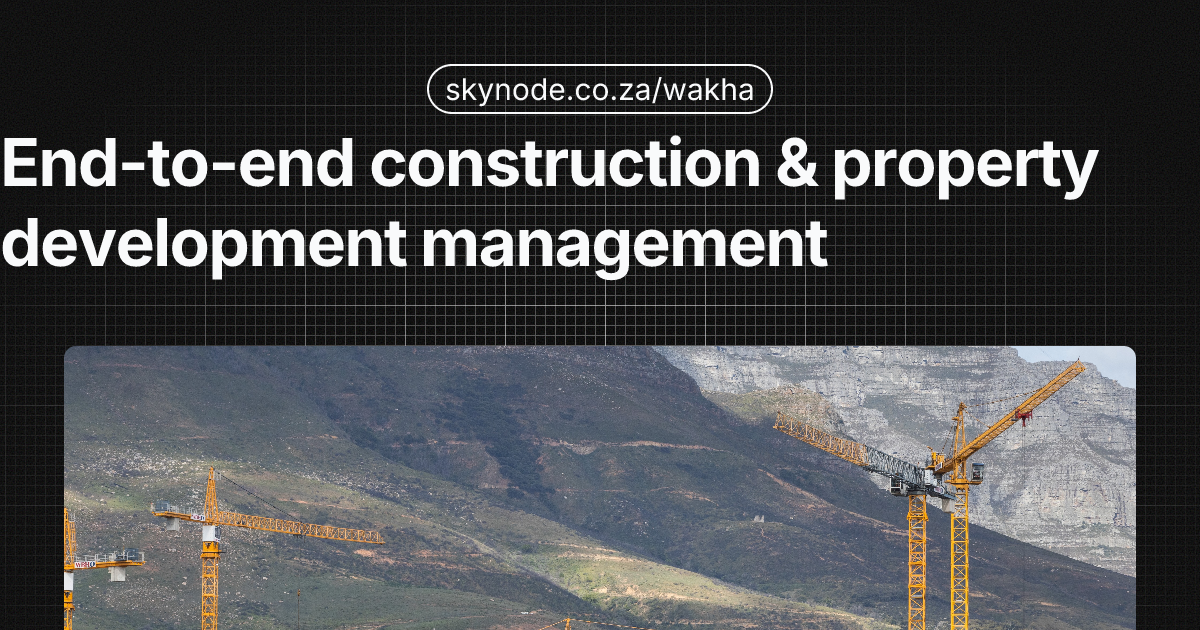
Construction Management in Cape Town
Many Cape Town contractors still handle construction management with spreadsheets, WhatsApp groups, and paper site diaries. That approach breaks down when you must satisfy City of Cape Town building regulations, B-BBEE procurement targets for tenders, CIDB grading limits, NHBRC requirements for residential work, and the reality of load shedding on site. Delays in documentation mean delayed payment certificates; gaps in compliance documentation can cost you tenders or trigger municipal pushback.
Construction management in Cape Town demands tools that understand local regulations, contract forms, and site conditions. This article outlines the main challenges Cape Town builders face, the regulatory context that shapes them, why generic or offshore software falls short, and what to look for in construction management software built for South Africa.
Why Cape Town Construction Management Is Uniquely Pressured
Cape Town’s construction market is busy across residential, commercial, and infrastructure, but capacity is stretched. Local builders face intense competition, layered regulation, and site-specific risks that generic project management tools do not address. The City of Cape Town enforces strict rules on water-wise construction, coastal setbacks, wind loads, and heritage. Wine estate work in Stellenbosch and Paarl involves agricultural zoning and environmental assessments; coastal jobs from Sea Point to Blouberg require material specs and designs that allow for salt spray, wind, and erosion.
At the same time, contractors compete for municipal tenders, corporate work, and private developments that typically require B-BBEE compliance, CIDB grading evidence, and NHBRC registration for residential builds. Construction management that fits Cape Town means handling all of this in one place.
Challenges Specific to Construction in Cape Town
City of Cape Town Building Regulations
The City of Cape Town applies some of the strictest building regulations in South Africa. Water-wise construction, coastal setbacks, wind load calculations, and heritage guidelines add complexity to every project. Builders must track compliance documentation, manage approval workflows, and ensure site work meets municipal standards. Gaps in documentation lead to delays, compliance findings, and possible penalties.
Coastal Construction Challenges
Cape Town’s coastal strip creates distinct construction risks. Salt spray corrosion drives specific material and coating specs. High wind loads require reinforced structural design. Coastal erosion affects foundations and earthworks. Projects in Sea Point, Blouberg, Camps Bay and similar areas need careful material selection and methods, with records to prove adherence to engineering requirements.
Water-Wise Construction Requirements
Water scarcity has made water-wise construction a municipal priority. Builders must demonstrate water-efficient design, rainwater harvesting, and greywater recycling where applicable. That adds documentation and compliance tracking that generic project tools do not cover.
Load Shedding and Offline Site Access
Cape Town has regular load shedding and many sites have poor connectivity. Site managers still need to log progress, capture photos, and record issues. Spreadsheet-based systems fail when power drops; cloud-only software is unusable without internet. Reliable construction management in Cape Town requires offline-capable site diaries and sync when back online.
Regulatory Context: CIDB, NHBRC, B-BBEE and the City
Cape Town projects sit inside national and local regulation. CIDB grading governs which project values you can tender for; municipal and government work often requires proof of grade and project-value alignment. Residential work requires NHBRC enrolment and inspection stages. Tenders and many private clients expect B-BBEE procurement evidence and verification. The City of Cape Town adds its own building by-laws, zoning, and approval workflows. Construction management that works in Cape Town must support all of this, not only scheduling and cost.
Why Spreadsheets and Generic Tools Fail Cape Town Builders
Spreadsheets and generic project management tools do not handle Cape Town construction management well. They lack B-BBEE procurement tracking and verification reports that tenders demand, and they do not model CIDB grading limits or NHBRC enrolment and inspection stages. Contract workflows for JBCC, NEC and GCC payment certificates stay manual and error-prone. Budgets and cash flow in R with VAT are often bolted on via accounting software, so project and finance stay disconnected.
Cloud-only tools fail during load shedding when site managers cannot log progress or access documents. US or European construction software is built for different contract forms, tax rules, and compliance regimes; adapting it for CIDB, NHBRC and B-BBEE is costly and incomplete. Construction management that works in Cape Town must be built for South African regulations, contracts, and site conditions from the start.
The Right Approach: What Cape Town Builders Need
Cape Town construction management works when one system covers project delivery and compliance. You need B-BBEE procurement tracked against tender targets with reports you can submit, and project values tracked against your CIDB grade with NHBRC enrolment and inspection stages managed in one place. Progress payment certificates for JBCC, NEC and GCC should be generated in the correct format so you get paid on time. Budgeting, invoicing and cash flow should be in R with VAT and local accounting practice.
Site diaries and documentation must work offline and sync when connectivity returns. When that is in place, you can prove compliance, reduce admin, and keep site and office aligned.
Practical Application: A Cape Town Scenario
A mid-size contractor runs three projects: a R8m residential development in Durbanville, a R4m commercial fit-out in the city bowl, and a R12m municipal infrastructure job. CIDB grade limits cap which projects they can hold; NHBRC applies to the residential work; the municipal contract requires B-BBEE and GCC payment certificates. Site managers move between Durbanville, town, and the infrastructure site, often with no reliable internet. Spreadsheets and WhatsApp cannot keep procurement evidence, payment certificates, and site records consistent. Construction management built for South Africa lets them track project values against grade, maintain NHBRC and B-BBEE documentation, generate GCC certificates, and keep site diaries and photos updated offline. Cash flow forecasts in R support tender and financing decisions. One platform replaces the patchwork and reduces the risk of lost tenders or delayed payments.
Who This Is For
This approach to construction management in Cape Town suits residential builders and small contractors (CIDB 1–6) doing houses and small developments, mid-size commercial contractors running multiple jobs with JBCC or NEC, and developers coordinating feasibility, construction and handover. It also fits subcontractors who need to align with main contractors’ compliance and reporting.
If you compete for municipal or corporate work, need NHBRC for residential projects, or run sites where load shedding and connectivity are issues, construction management that combines compliance, contracts, and offline capability is relevant to you.
Next Step
Cape Town builders need construction management that understands City of Cape Town regulations, CIDB and NHBRC compliance, B-BBEE procurement, and the need to work offline on site. See how Wakha helps South African builders manage B-BBEE compliance, CIDB grading, NHBRC workflows, and project delivery from one platform.
Written by
Wakha Team