
How to Start a Property Development Company in South Africa
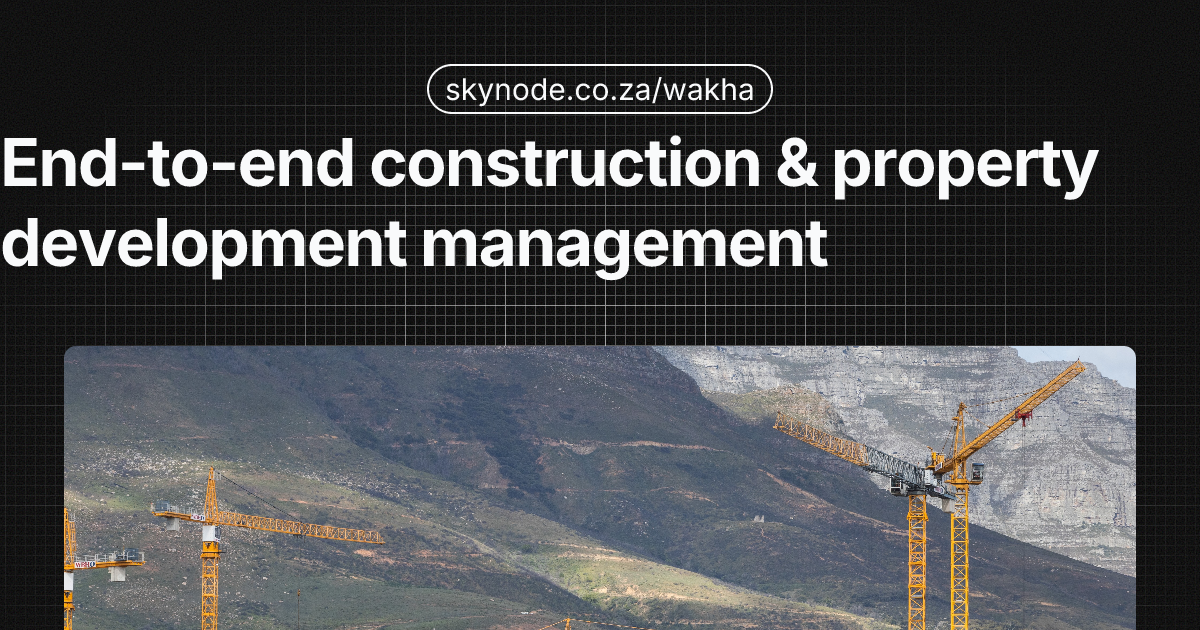
There is a difference between doing a property development deal and building a property development company. The first is a project; the second is a business that does projects repeatedly, with a structure, a team, a reputation and the systems to manage several schemes at once. Many people do one deal; far fewer build the company, because that requires thinking beyond the immediate project to the entity that will carry the next ten. Starting that company well — getting the structure, the foundations and the systems right early — makes the difference between a developer who scales and one who stays a one-deal operator.
This guide covers how to start a property development company in South Africa: the structure to consider, the first project, building the team, accessing finance, and the systems that let a company scale.
Decide on a structure
A property development company needs a legal and financial structure suited to development, and this is worth getting professional advice on early. Developers commonly use companies, and often a structure that separates projects — sometimes a separate entity per development — to ring-fence risk and make funding and partnerships cleaner. The right structure depends on your circumstances, your tax position, how you intend to fund and partner, and your appetite for risk. The point is to decide deliberately, with advice from a professional who understands development, rather than defaulting to whatever is easiest and discovering the limits later.
This is not glamorous, but the structure shapes how you raise finance, bring in partners, manage risk and pay tax across every future project, so it repays getting right at the start.
Get the first project right
A new development company is judged on its first projects, so they matter doubly — once for their own return, and once for the track record they build. The advice that applies to a new developer applies to a new company: start at a scale you can deliver and survive, prove the model, and build a track record before scaling ambition. A company that lands its first one or two projects cleanly earns the credibility that unlocks finance, partnerships and better opportunities; one that overreaches on its first scheme can sink the company before it has really begun.
Treat the first project as both a deal and a demonstration. Run it with the discipline and systems you intend to use at scale, even if it feels like more than a single small deal needs, because that is how you prove — to yourself, to funders and to partners — that the company can execute.
Build the team and relationships
A development company is its relationships as much as its balance sheet. The professionals you work with — conveyancers, architects, quantity surveyors, town planners, engineers, contractors — and your relationships with funders, agents and the municipalities you operate in, compound in value over time. A company that invests in good, lasting professional relationships finds every subsequent project easier; one that treats professionals as interchangeable and transactional pays for it in execution. As the company grows, you will also build an internal team, and the same principle applies: the capability you assemble is a core asset of the business.
Access finance as a company
Funding a development company is a step beyond funding a single deal. Lenders and partners look at the company’s track record, structure, team and systems, not just the individual project. A company that can demonstrate a clean record of completed projects, a sensible structure and the systems to control and report on developments is far more financeable than one that cannot. Building that fundability deliberately — through delivered projects and demonstrable control — is part of building the company, and it widens the funding and partnership options available as you scale.
Reputation and the long game
A property development company trades on its reputation more than almost any other kind of business, because the parties it depends on — funders, professionals, contractors, partners, buyers — all make decisions about the company based on whether it delivers what it promises. Reputation is slow to build and quick to lose, and a company that understands this from the start makes choices that compound in its favour over years.
The mechanics are simple but powerful. A company that delivers projects on time, pays its professionals and contractors fairly and promptly, treats buyers well, and is honest with funders becomes a company others want to work with. Funders offer better terms; the best professionals make themselves available; contractors prioritise its sites; buyers trust its developments; partners bring it opportunities. A company that cuts corners, disputes fees, surprises funders or disappoints buyers finds the opposite — and on a long enough timeline, that reputation determines the cost and availability of everything the company needs.
This is why the long game matters more than the quick win. A development company tempted to squeeze a professional, conceal a problem from a funder, or over-promise to a buyer for a short-term gain is usually trading a small immediate benefit for a lasting reputational cost. The companies that scale are typically the ones that treat every project as a contribution to a reputation, delivering reliably and dealing fairly, because they understand that the next ten projects depend on how they handled the last one. Building that reputation deliberately, from the first project, is one of the most valuable things a new company can do.
Put systems in place to scale
The single clearest divider between companies that scale and those that stall is systems. Running one project on spreadsheets and goodwill is manageable; running several at once that way is how a growing company drowns in reconciliation, missed compliance and reporting fire drills. A development company that adopts proper systems early builds an operating model that grows with it. Wakha is built for South African residential developers and holds each project as one record — programme, ZAR budget and cash flow, site diary, NHBRC and B-BBEE compliance, JBCC/NEC/GCC payment certificates and a buyer portal — with portfolio oversight across projects, so a growing company can run many schemes without losing control of any.
If you are building a development company and want systems that scale with you, see how Wakha supports a company from its first project to a portfolio: explore Wakha.
Frequently Asked Questions
How do I structure a property development company in South Africa?
Developers commonly use companies and often separate projects into distinct entities to ring-fence risk and simplify funding and partnerships. The right structure depends on your tax position, funding intentions, partnership plans and risk appetite, so it is worth getting professional advice early. The key is deciding deliberately, because the structure shapes how you raise finance, bring in partners, manage risk and pay tax across every future project.
Do I need experience before starting a development company?
It helps enormously, which is why many people do a deal or two as an individual before formalising a company, or start the company with a small first project to build experience and track record together. A company with no delivery behind it faces the same finance and credibility barriers a new developer does, so building experience — whether before or through the first company projects — is essential.
How is starting a company different from doing one deal?
A deal is a single project; a company is a business that does projects repeatedly, with a structure, a team, relationships, a reputation and the systems to manage several schemes at once. Building the company means thinking beyond the immediate project to the entity that carries the next ten, and investing in structure, relationships and systems that a single deal would not strictly require.
How do development companies raise finance?
Lenders and partners assess the company’s track record, structure, team and systems, not just the individual project. A company with a clean record of completed projects, a sensible structure and demonstrable control over its developments is far more financeable. Building that fundability through delivered projects and visible control is part of building the company and widens the funding and partnership options as it scales.
What systems does a development company need?
As it grows beyond one project at a time, a company needs systems that hold each project’s programme, cost, cash flow, compliance and documents in one record, with oversight across the portfolio. Running several projects on spreadsheets is how a growing company loses control through reconciliation errors, missed compliance and reporting fire drills. Adopting development software early builds an operating model that scales with the company.
Should I separate each project into its own entity?
Many developers do, to ring-fence the risk of one project from another and to make project-level funding and partnerships cleaner. Whether it suits you depends on your circumstances, and it carries administrative cost, so it is a decision to take with professional advice. The underlying principle — structuring deliberately to manage risk and funding — matters regardless of the specific form you choose.
How do I find my first development deal?
Most early deals come from knowing a market well and watching it closely — tracking land coming to market, underused sites, and properties where the zoning or planning framework allows more than the current use. Relationships help enormously: agents, planners and other developers are sources of opportunities that never reach open marketing. The discipline is to run a quick feasibility on anything promising and pursue only the deals that survive it, rather than chasing the first available site. A first deal worth doing is one the numbers support, not simply one you can get.
Related Articles:
Written by
Wakha Team