
Construction Management Software Pretoria
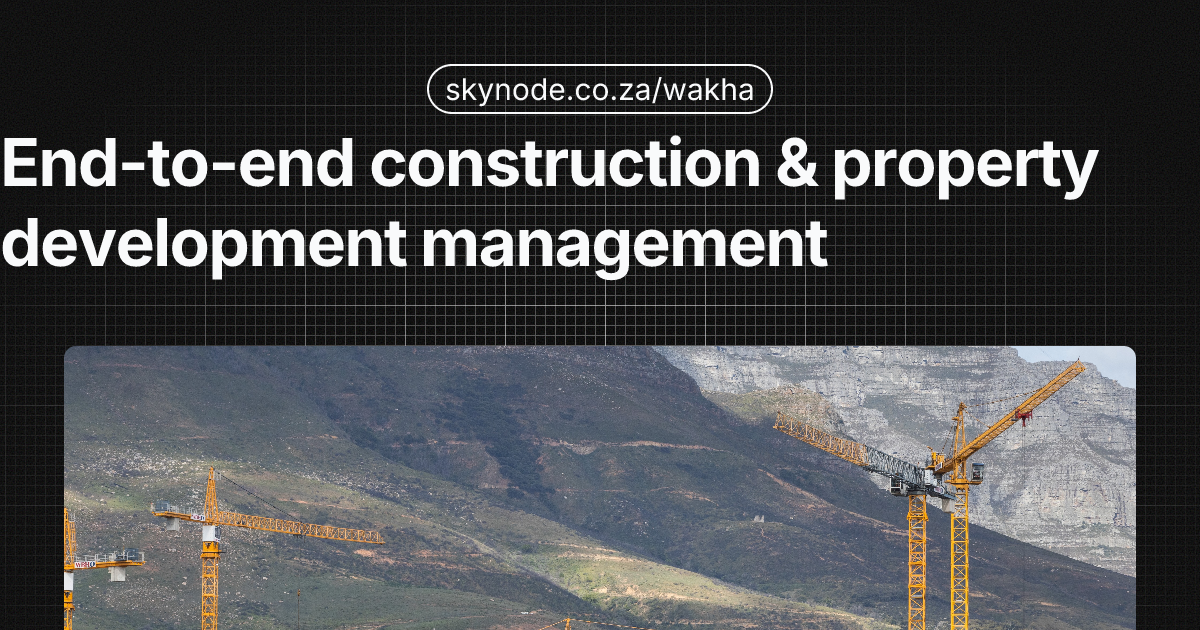
Construction Management Software in Pretoria
Pretoria contractors competing for government and institutional work face a recurring problem: tender documents demand CIDB grading proof, B-BBEE procurement reports, and full project documentation, while many firms still run schedules on spreadsheets, share drawings via WhatsApp, and keep site records on paper. When load shedding hits or connectivity drops on site, those systems fail. The result is missed tender deadlines, compliance gaps, and payment delays when certificates and supporting documents are not in order. This guide sets out why construction management in Pretoria demands a different approach, how regulations shape what you need, and what to look for in software that fits the local market.
Why Pretoria’s Construction Market Is Unusually Compliance-Heavy
As the administrative capital, Pretoria concentrates government and institutional construction. National departments, parastatals, Tshwane metro, and bodies such as the University of Pretoria run projects that require proven CIDB grading, B-BBEE compliance, and strict documentation. Contractors bidding for this work must show eligibility, maintain audit trails, and track project values against their CIDB limits. At the same time, residential work in Centurion, Midstream, Menlyn and Hatfield brings NHBRC enrolment, warranty stages, and defect liability into play. Pretoria builders are not only delivering buildings; they are constantly proving compliance to win and retain work.
The Regulatory Context: CIDB, B-BBEE, and NHBRC
Public sector construction in South Africa is governed by the CIDB Act and associated grading. Tenders typically specify minimum contractor grades by project value; contractors must hold the correct grade and keep evidence of it. The CIDB grading system ties your registration to the size and type of work you can tender for. Separately, the B-BBEE Construction Sector Code requires procurement spend with compliant suppliers and verified reporting; without it, government and many corporate tenders are out of reach. For residential projects, NHBRC enrolment and inspection stages are mandatory. Construction management software in Pretoria must support all three: CIDB project-value and grade tracking, B-BBEE procurement and reporting, and NHBRC workflows, not just generic task lists.
What Good Construction Management Looks Like for Pretoria Contractors
Effective construction management here means one place for programme, site records, documents, and compliance. Site diaries should be fillable on a phone and usable offline so that load shedding does not stop daily updates. Payment certificates under JBCC, NEC, or GCC need to be generated with correct retention and variation handling so that applications are accurate and on time. Budgets and cash flow should be in Rands with VAT and local reporting in mind. B-BBEE spend should be tracked by supplier and category so that tender and audit reports can be produced without reworking spreadsheets. These are operational requirements as much as compliance ones; missing them leads to delayed payments, disputes, and lost tenders.
Why Spreadsheets and Generic Tools Fall Short
Spreadsheets and WhatsApp work for ad hoc coordination but break down when tenders require structured B-BBEE reports, when auditors ask for a clear audit trail, or when a payment certificate is disputed and every variation and retention amount must be traceable. Cloud-only project tools from overseas often assume stable connectivity, use different contract terminology (e.g. change orders instead of variations, punch lists instead of snag lists), and do not model CIDB grades, NHBRC stages, or Rands with local tax and reporting. Accounting software alone does not manage programmes, site diaries, or compliance workflows. Pretoria contractors need construction management software that combines scheduling, site documentation, contract administration, and compliance in one system built for South African conditions.
Practical Application: A Typical Pretoria Scenario
Consider a mid-sized contractor based in Centurion, CIDB graded for projects up to R10m, running two jobs: a government office refurbishment in Hatfield and an NHBRC-enrolled residential phase in Midstream. The government job requires monthly payment certificates under GCC, B-BBEE procurement reports at each claim, and site records that can be reviewed by the department. The residential job needs NHBRC stage sign-off, snag lists ahead of practical completion, and retention tracked to release. Without a single platform, the team juggles Excel for programmes, email for drawings, and paper site diaries that get lost or delayed. Cash flow suffers when certificates are late or incomplete. A construction management system that handles CIDB and project values, B-BBEE spend and reports, JBCC/NEC/GCC certificates, NHBRC stages, and offline-capable site diaries would let the same team submit on time, prove compliance, and get paid without re-keying data across systems. For more on managing cash flow and delays, see construction cash flow management and construction project delays.
Who This Is For
This approach to construction management software is relevant to builders and developers active in Pretoria and Tshwane who tender for government or institutional work, or who run mixed portfolios of commercial and residential projects. It suits firms that must maintain CIDB grading, demonstrate B-BBEE procurement, and manage NHBRC enrolment and handover. It is also relevant to those who need reliable site documentation and payment processes when load shedding and connectivity are inconsistent. If your work is governed by local contracts, compliance, and Rands, you need tools that are designed for those requirements rather than adapted from overseas.
Next Step
Pretoria builders who want to consolidate programmes, site diaries, compliance tracking, and payment certificates in one place can evaluate a platform built for South African construction: CIDB and B-BBEE documentation, NHBRC workflows, JBCC/NEC/GCC payment certificates, Rands-based budgeting and cash flow, and offline-capable site access. See how Wakha supports construction management from feasibility to handover for builders and developers across Pretoria and Tshwane.
Written by
Wakha Team